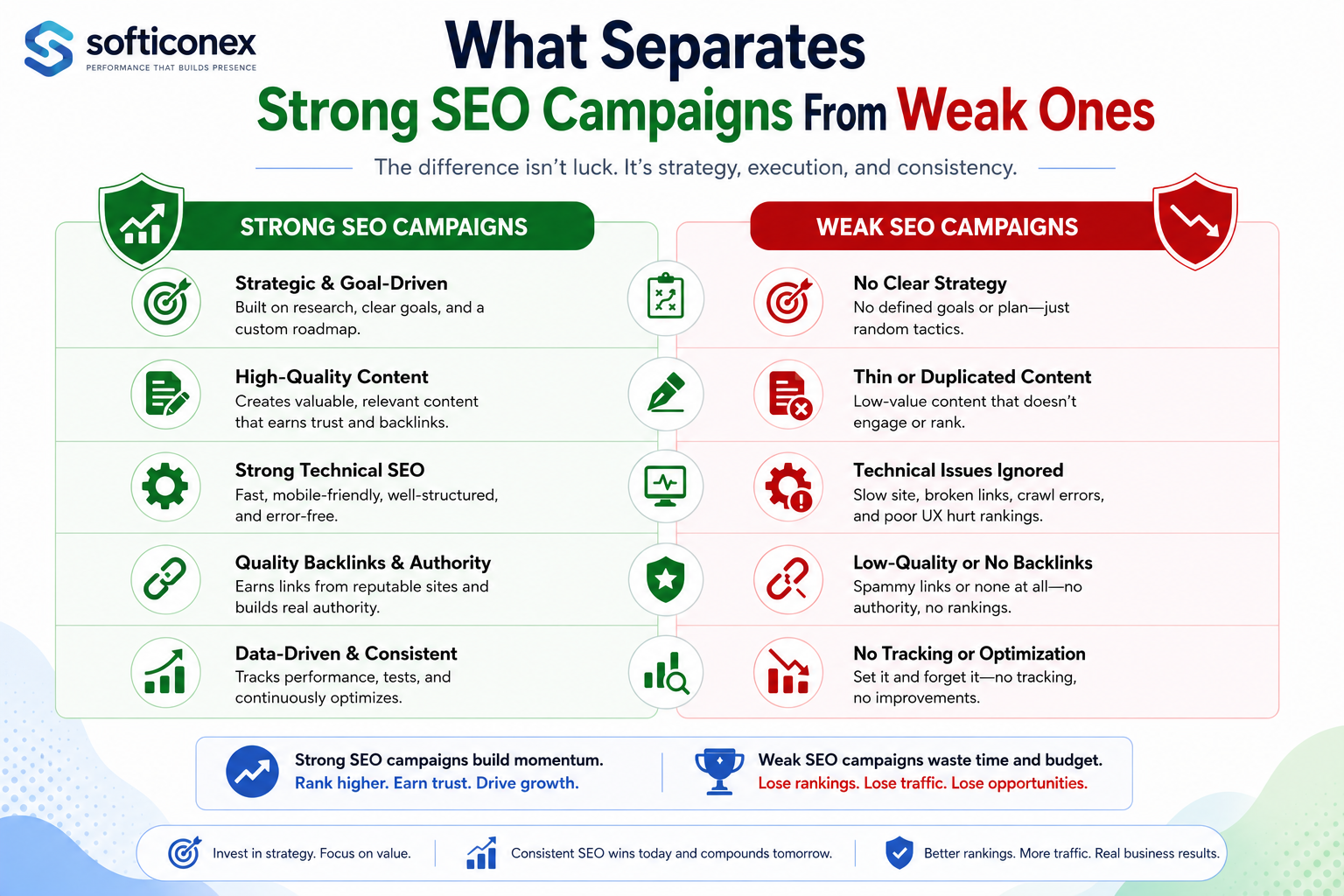
Some websites appear everywhere online while others remain buried under pages of search results despite publishing content constantly. The difference is rarely explained by luck alone. Strong SEO campaigns are usually built through consistent strategy, thoughtful planning and a what-actually-helps-the-user mindset that many businesses overlook while chasing shortcuts.
SEO has changed significantly during the last several years. Search engines now evaluate websites with far more scrutiny than before. Thin content, weak backlinks and poorly organized pages are identified quickly. Businesses that still rely on outdated tactics often discover that visibility becomes harder to maintain even after investing heavily in digital marketing.
A strong campaign is rarely built through one tactic alone. Rankings are influenced by technical performance, content quality and online authority working together. Weak campaigns usually focus too heavily on one area while ignoring the rest – this creates uneven results that fail to last.
Strong Foundations Change Everything
Many businesses focus on rankings before fixing the basics. That approach often creates frustration because poor website structure and weak authority signals limit long-term growth. Strong SEO campaigns usually begin with careful audits and realistic planning instead of rushed shortcuts.
This is why many companies invest in a reliable backlink building service early in the process. Strong backlinks help search engines understand that a website carries credibility and relevance within its industry. Without authority signals from trusted websites, even well-written content may struggle to compete.
A strong foundation also depends on technical clarity. Pages should load properly, navigation should remain simple and information should stay easy for search engines to process. Why would search engines prioritize websites that create frustrating user experiences?
For example, imagine two online stores selling similar products. One site loads slowly, contains broken pages and offers confusing navigation. The second site feels organized and trustworthy with stronger authority signals supporting it online. Search engines are more likely to favor the second business because the overall experience appears stronger.
Weak SEO campaigns often ignore these foundational problems while focusing only on content volume. More pages do not automatically create stronger rankings if the website itself feels difficult to trust.
Weak Campaigns Chase Tricks Instead Of Strategy
Search engine optimization attracts shortcuts because businesses often want quick visibility. Weak campaigns usually rely on tactics designed to manipulate rankings instead of improving website quality. Repetitive keyword stuffing, low-quality backlinks and rushed content are still being used despite their declining effectiveness.
Strong campaigns operate differently because long-term growth is prioritized instead of temporary spikes. Content is created with purpose and authority is developed steadily through trustworthy signals. Search engines reward consistency more than shortcuts because credibility matters heavily during rankings.
Several habits often separate weak SEO efforts from stronger ones:
- Low-quality backlinks are avoided carefully
- Content is written for people before algorithms
- Technical website problems are addressed early
- Search intent is studied before publishing pages
- Authority signals are strengthened consistently
- User experience remains part of the strategy
Weak campaigns often ignore these details because they focus heavily on rapid results. That impatience creates unstable performance since search engines increasingly recognize manipulative behavior.
Patience Often Separates Winners From Everyone Else
One of the biggest differences between strong and weak SEO campaigns involves expectations. Weak campaigns often expect immediate results and become inconsistent when rankings do not improve quickly. Strong campaigns understand that authority develops gradually through consistent effort.
SEO works differently from paid advertising because trust must be earned with search engines. Backlinks, content authority and technical improvements influence visibility slowly. Businesses that panic after a few weeks often abandon strategies before meaningful progress appears.
Patience also influences decision-making. Strong campaigns continue improving technical performance, refining content and strengthening authority even when growth feels gradual. Weak campaigns frequently change direction too quickly, which creates unstable results.
For example, imagine a startup investing in thoughtful SEO improvements for an entire year while competitors chase temporary ranking tricks every few months. The slower strategy may appear less exciting initially – though stronger authority often develops steadily underneath the surface.
Would businesses still rely so heavily on shortcuts if they understood how much consistency influences rankings? Many probably would rethink their approach entirely.
Strong SEO Builds Trust Before Traffic
Traffic numbers often receive most of the attention – but trust sits underneath every strong SEO campaign. Search engines aim to recommend websites that appear credible, organized and genuinely useful for users. Weak campaigns usually focus too heavily on visibility while ignoring trust signals completely.
A strong SEO strategy improves more than rankings. Brand authority grows, customer confidence increases and online reputation strengthens when businesses communicate clearly and maintain quality consistently. Those benefits support long-term visibility far more effectively than manipulative tactics.
SEO success is rarely created through one viral article or one technical fix. It develops through steady improvements, stronger authority and thoughtful decision-making that aligns with what users actually need. Businesses willing to invest in those fundamentals usually create stronger results while weaker campaigns continue chasing temporary gains that rarely last.