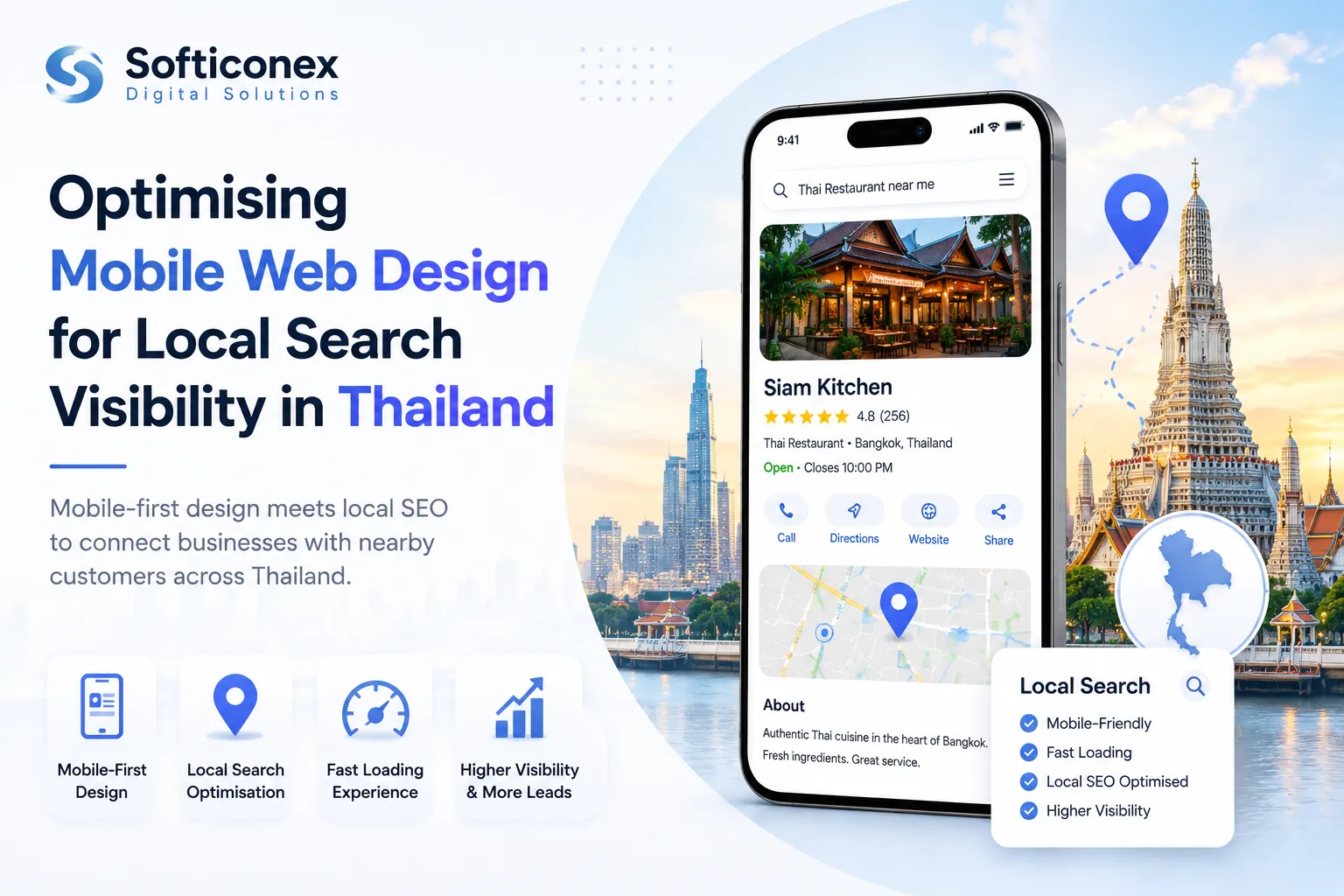
Thailand has rapidly become one of the most dynamic digital economies in Southeast Asia, presenting massive opportunities for international brands. With local e-commerce projected to surpass $35 billion in gross merchandise value by 2025, capturing consumers requires a flawless digital experience. The baseline for entry is staggering when looking at the sheer volume of mobile users. According to a recent report by DataReportal, Thailand’s active cellular mobile connections equated to 139 percent of the total population in early 2025, alongside an internet penetration rate of over 91 percent. This saturation means that building a mobile-first framework is no longer an optional upgrade. It is a mandatory requirement for any business looking to compete successfully on a global scale.
The Technical Foundations of Mobile UX
Before diving into regional search marketing, companies must ensure their underlying web architecture is technically sound. Thailand boasts an incredibly advanced mobile network infrastructure. Major telecom carriers now deliver median 5G download speeds exceeding 150 Mbps. Consequently, network latency is no longer a valid excuse for slow-loading websites. Consumer data reinforces this reality, showing that local site abandonment rates spike drastically if a page takes longer than three seconds to load. This expectation of instant gratification means developers must prioritise lightweight coding frameworks and efficient server response times to retain their audience.
Establishing a robust foundation requires a deep understanding of user experience principles. Consulting a comprehensive mobile app development guide can help teams build platforms that keep users engaged and reduce bounce rates. Beyond page speed, seamless transactional features are critical for modern consumers. National mobile wallet adoption has reached approximately 63 percent, heavily driven by localised payment systems like PromptPay. Integrating these digital payment methods directly into a mobile interface ensures a frictionless journey from discovery to checkout, significantly boosting overall conversion rates.
Aligning Design with Local Thai Search Behaviour
Once a fast and responsive mobile site is established, the focus must shift to regional ai visibility. Google maintains a near-total monopoly in the Thai search market, capturing over 97 percent of mobile queries into 2026. Furthermore, mobile-first queries account for over 70 percent of all search activity across the country. Because ranking algorithms heavily favour sites that offer excellent regional user experiences, technical design and search strategy must work in tandem. Navigating these regional algorithms can be complex, making it advantageous to consult a reputable Bangkok SEO agency to ensure your technical framework aligns perfectly with local search dynamics.
Location-based intent is particularly powerful in urban centres. Industry data reflects a 42 percent year-over-year increase in localised search queries for nearby businesses. The intent behind these searches is highly actionable. In fact, research indicates that 76 percent of Bangkok consumers who conduct a local business search on their smartphone visit the physical location within 24 hours. Capitalising on this footfall requires a tailored approach to how information is presented to the user.
To capture this high-intent traffic, web developers and marketers must integrate specific design elements into their mobile platforms:
- Voice-Friendly Navigation: Approximately 38 percent of Thai smartphone users rely on voice commands to find local services, meaning content must be structured around natural, conversational phrasing.
- Prominent Location Signals: Mobile interfaces should feature easily accessible maps, local contact details, and click-to-call buttons to facilitate immediate offline visits.
- Social Browser Compatibility: Social platforms like TikTok and LINE increasingly act as local discovery engines in Thailand. Mobile web designs must render perfectly within these in-app browsers to prevent user drop-off.
Navigating AI Overviews and the Future of Discovery
The introduction of artificial intelligence in search engine results has fundamentally altered top-of-page visibility. By early 2026, AI-generated summaries began appearing on nearly 48 percent of all tracked queries. Crucially for the Thai market, roughly 81 percent of searches that trigger these AI overviews happen on mobile devices. This forces brands to structure their mobile content specifically for AI-driven indexing, ensuring that technical site speed and concise answers are immediately accessible.
Ultimately, succeeding in Thailand requires a holistic approach to digital development. Over 90 percent of Thai online shoppers use smartphones as their primary purchasing device. By combining lightning-fast mobile web design with strategic local search optimization, international tech companies can build platforms that not only rank well but also convert highly engaged local traffic into loyal customers. Embracing this synergy between performance and visibility is the key to sustained growth.