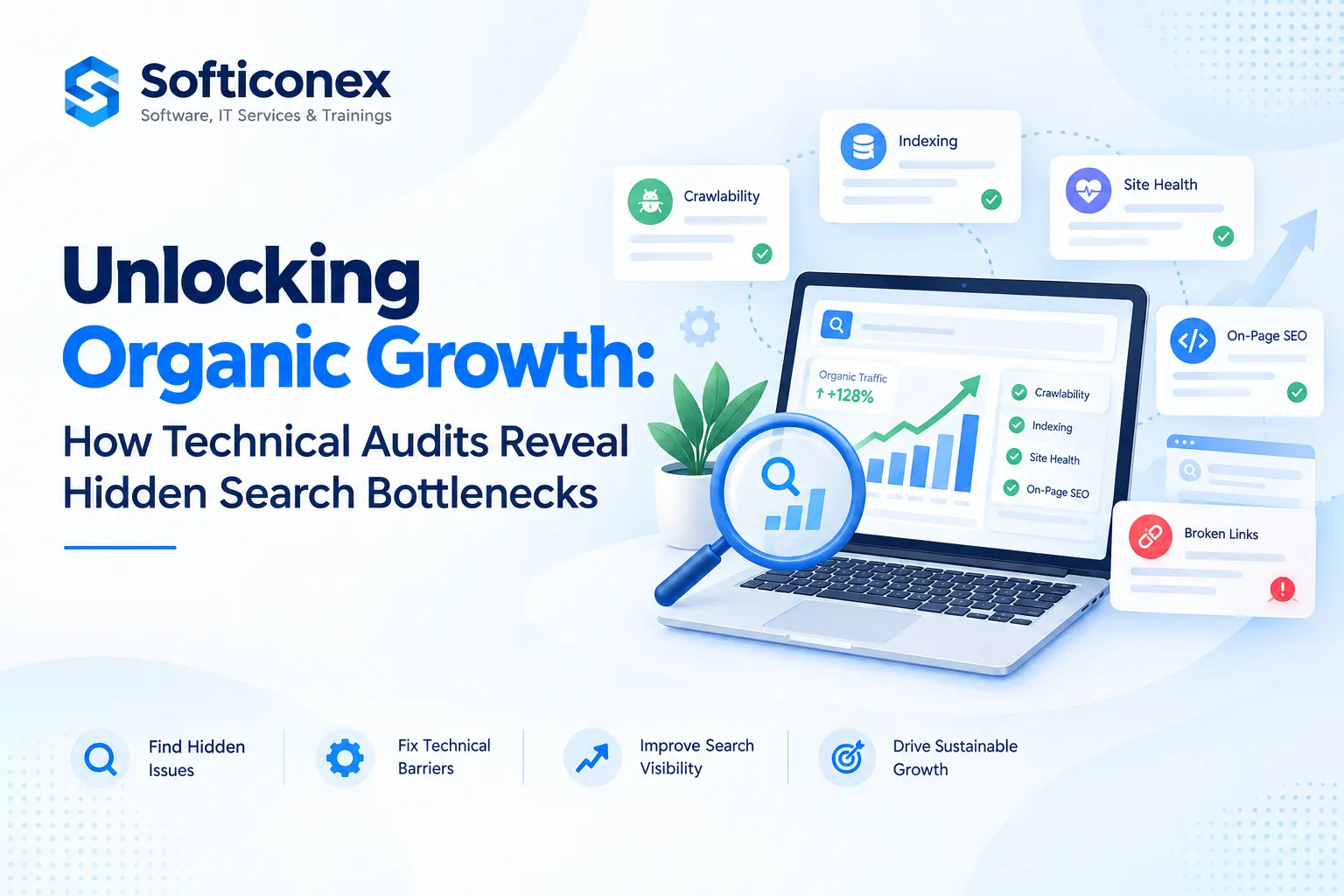
Organic growth does not rely on just one SEO thing. A site can have good content, a nice look, and good items for people to buy. Even then, it may still have problems getting seen online. This can happen when small tech issues stop search engines from seeing, understanding, or adding their web pages. Identifying these minor issues is often the first step towards making your website more visible through search results.
An SEO Audit will highlight those issues that you cannot notice while checking your website on a daily basis. SEO audits are not limited to rankings only, as they analyze the website as a whole, including its technical issues, content, search intent, and authority. That’s important because search engines need to locate and parse your site first for it to get indexed.
The Problem May Exist Where You Least Expect It
One of the most annoying problems with SEO can be when everything about the page looks great from the visitors’ perspective, but there are some problems with it being reached by search engines.
Imagine a simple diagnosis process:
Crawlability comes first. Then there is indexation. After that, you need to think about relevance. Next, focus on user experience. All these help your site get more AI visibility.
A problem that happens early in this chain can change everything after it. Google says crawling, indexing, and serving all happen at different times. Not every page Google finds will be in its index.
1. Crawlability Comes First
Search engines use bots that go through and get webpages. Problems can come up from robots.txt rules, broken links, server answers, redirects, or pages that cannot be reached, and these can stop that from happening.
A technical review can, because of this, ask real questions:
- Can the main pages be found?
- Do links inside the site go to places that help the user?
- Do the redirects work as they should?
- Can crawlers reach key resources?
- Do extra URLs make things hard to understand?
Google suggests that you use crawlable links, good sitemaps, and the right crawling controls. This helps search engines find the important content on your site.
2. Indexation Is a Separate Challenge
Just because something is crawlable doesn’t necessarily mean that it will be indexed.
Factors such as duplicate pages, wrong use of noindex tags, issues related to the canonical tag, thin content, or technical seo issues may affect whether a page will be included in the index or not. Google says that just doing the basic technical steps does not show that your page will get indexed.
Indexation analysis is really important when a site has a lot of pages. Sometimes, only some pages show up in organic search results. This helps us see which pages are visible and which are not.
3. Content and Technical SEO Must Work Together
Technical changes will not fix content that does not meet what the searcher wants.
A good audit should not just look at code. It should check other things as well.
| Area | Key Question |
| Search intent | Does the page answer what the visitor wants? |
| Content depth | Does it provide enough useful information? |
| Internal linking | Can related information be discovered easily? |
| Metadata | Are titles and descriptions descriptive and relevant? |
| Structure | Is the information organized clearly? |
Google’s advice says to make content that is helpful and trustworthy. It also says to put people first. Your content should be easy for people to read and for computers to find.
4. Turn Findings Into Priorities
The real value of an audit is not just finding a long list of mistakes. It is about knowing which problems need to be fixed first.
A practical roadmap can separate findings into:
Critical: Issues that stop Google from crawling, indexing, or opening the site
Important: Problems that hurt how people use the site, what the site is about, or how the site is built
Growth opportunities: Places where content is missing, where the right words can help, where links inside the site can be stronger, and where the site can feel more trusted
Ongoing: Watching, checking, and making sure things work well
This way turns hard data into clear steps. You can use the information and not feel lost in a big spreadsheet.
Conclusion
It’s easier to manage organic growth if there are things that can’t be seen on your website. The analysis of crawlability, indexation, content relevancy, website architecture, technical aspects, and search intent all together help companies avoid making guesses regarding their search performance. They can make smart changes with the right info. A well-structured SEO Audit can bring everything together. It helps turn many SEO problems into a clearer plan that’s easier to use. This makes steady organic growth possible.