Running a startup is one of the most exciting things you can do. It is one of the most demanding things. You juggle product, sales, marketing, operations and finance often all at once, often with a small team. The founders who build fast and stay lean all share one discipline: they pick their tools carefully.
After working closely with dozens of early-stage companies, one pattern stands out clearly. The startups that scale without burning out do not buy every shiny tool they see. They invest deliberately in software that delivers a measurable return in time saved, revenue generated, or costly mistakes avoided.
This guide brings you the top-rated SaaS tools for startups that deliver insane ROI with honest, experience-backed context for each one. No fluff. No filler. Just tools that earn their place in a smart startup stack.
What “Insane ROI” Actually Means for a Startup
Before diving into the list, it helps to define the term clearly.
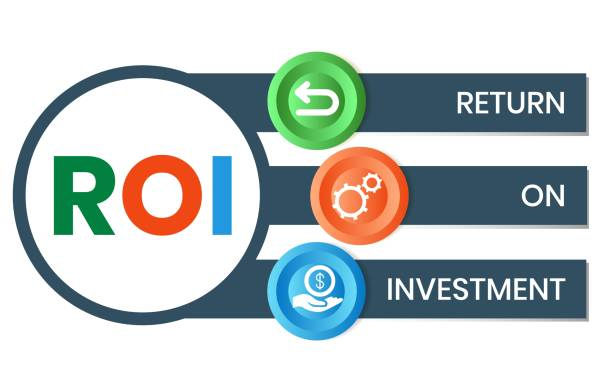
Return on investment from a software tool shows up in three ways:
- Direct revenue impact
- Cost displacement
- Time recovery
Direct revenue impact: Means the tool helps you win more customers, retain the ones you have, or increase the value of each transaction.
Cost displacement: Means it replaces something more expensive: a service, an agency or a full-time hire.
Time recovery means: It automates repetitive work so your team focuses on things that actually move the business forward.
The best tools deliver all three simultaneously. That is what separates a great investment from a line item you quietly cancel after three months.
Top-Rated SaaS Tools for Startups That Deliver Insane ROI
SendPulse: Run Your Entire Marketing Stack Without Paying for Five Tools
Most early-stage startups piece together their marketing channel by channel. Email goes to one platform. Chatbots require a second subscription. Before the product reaches traction, the stack is already fragmented, expensive, and full of gaps where data should be flowing.
SendPulse removes that fragmentation by combining email campaigns, chatbots, CRM, SMS, pop-ups, and a landing page builder into one connected platform. Because every tool is built in-house and already integrated with the others, there are no zaps to configure and no sync delays. A lead captured in a pop-up flows directly into the CRM, triggers a chatbot sequence, and enters an email automation without anyone touching it manually.
The free tier makes the case even harder to argue with. 15,000 emails per month, 3 chatbots with automated flows, a full CRM, and a landing page builder are all available without a credit card. For a pre-revenue startup that would otherwise pay separately for Mailchimp, a chatbot tool, and a CRM, SendPulse represents a complete marketing foundation at zero cost, with paid plans that scale up only when the business demands it.
HubSpot CRM: Build a Sales Engine Without Spending a Dollar
Most early-stage founders track leads in spreadsheets. It works until it does not and the moment it breaks down, deals start slipping. A follow-up that should happen on Tuesday gets forgotten. A warm lead goes cold because nobody noticed. Revenue leaks quietly, and the damage only shows up at month end.
HubSpot eliminates that problem without charging a penny upfront. The free CRM gives every team member a live view of every contact, every deal stage and every recent interaction.
Nothing gets lost. Nothing stays in someone’s personal inbox.
The ROI accelerates when you add HubSpot’s email sequences. Instead of a sales rep manually sending the same follow-up email for the tenth time this week. The system handles it automatically, personalized, timed and tracked.
What makes the ROI insane:
- Replaces a paid CRM, a separate email tool and a form builder
- Tracks email opens and link clicks so reps know exactly when to call
- Surfaces overdue follow-ups automatically so nothing slips
- Scales from one founder to a full sales team without a platform change
Whop: Take Payments and Pay People Without Building Billing
Every startup on this list eventually needs to charge a customer and, often, pay a contractor or partner, and the usual answer is a processor, a billing tool and a payout service stitched together by a developer who should be building the product. Whop is a payment platform that handles all three from one account: checkout links or an embedded checkout, one-time and renewing plans, and payouts to over 186 countries.
The ROI is engineering time. A founder creates a plan and shares a checkout link the same day, and for technical teams there is an API, SDKs and a sandbox with test cards, so the payments integration is a week of work at most. Pricing is per transaction with no monthly fee: 2.7% + $0.30 per domestic card payment.
Table row: Whop | Payments & billing | $0/mo, 2.7% + $0.30 per sale | Checkout, subscriptions and payouts without a billing build
Zapier: Recover Hours Every Week Without Writing a Line of Code
Every startup runs on invisible repetitive tasks. Someone copies a new lead from a form into the CRM. Someone updates a Slack channel when a payment comes through. Someone adds a row to a spreadsheet every time a user signs up. These tasks feel minor individually. Collectively, they devour hours every single week.
Zapier connects over 7,000 apps and automates the transfer of information between them with no developer required. Zapier runs silently in the background, around the clock, handling the work that should never have required a human in the first place.
Where the return comes from:
- Lead data flows automatically from forms into your CRM no manual entry
- New customer payments trigger Slack alerts, invoice creation and onboarding emails simultaneously
- Support tickets route to the right team member without anyone playing dispatcher
- Weekly reports compile themselves from multiple data sources
Intercom: Keep Customers So You Stop Replacing Them
That single fact explains why Intercom delivers such a powerful return for growth-stage startups. It combines live chat, an AI support bot, in-app messaging. Product tours into one platform turning customer support from a cost center into a retention engine. While full enterprise access can be an investment, leveraging an Intercom discount through startup programs or annual billing brings elite customer engagement within reach of early-stage budgets
Intercom’s AI assistant, Fin, resolves a large share of support queries without any human involvement. Users get instant answers. Your team handles only the complex cases that genuinely require human judgment. For a startup, this frequently means the difference between hiring two support agents and hiring none.
The deeper return comes from proactive engagement. Intercom watches user behavior and triggers messages when someone shows signs of disengagement. A gentle nudge at exactly the right moment that saves a customer you would otherwise lose silently.
Canva Pro: Move at the Speed of Your Ideas
Design bottlenecks kill startup momentum. Waiting three days for a designer to produce a social post or pitch deck slide is a luxury most early-stage teams cannot afford. Canva Pro removes that bottleneck entirely by giving every team member the ability to produce polished, on-brand visuals in minutes.
The ROI is not just in saved design fees. It lives at speed. When your marketing team can produce and test five ad creatives in a single afternoon rather than waiting a week. The compounding impact on growth is real and measurable.

Mailchimp: Turn Your Audience Into a Revenue Channel
Email marketing consistently delivers the highest return of any digital channel. Industry data places the average return at $36 for every $1 spent. Mailchimp makes that channel accessible to startups at every stage. with a free tier that handles the needs of most early-stage teams without any commitment.
The real power sits in automation. A well-built welcome sequence introduces new subscribers to your product at exactly the right pace. An abandoned cart email recovers revenue that would otherwise disappear. A re-engagement campaign wins back subscribers who stopped opening. All of this runs automatically, every day without any manual effort from your team.
Notion: Build the Brain Your Team Shares
Information chaos is one of the most expensive hidden costs in early-stage startups. Team members spend time searching for documents that live in someone’s personal Drive. New hires ask the same questions repeatedly because no central knowledge base exists. Decisions repeat themselves because nobody recorded the reasoning the first time.
Notion solves this by becoming the single place where everything lives: product roadmaps, SOPs, meeting notes, hiring pipelines and team wikis all in one organized, searchable workspace. The impact on a growing team is immediate and tangible.
Google Workspace: The Foundation Every Startup Builds On
Google Workspace is the quiet workhorse that underpins most high-performing startup teams. Understanding Google Workspace pricing helps startups budget effectively for professional email and collaboration tools, while Gmail, Drive, Docs, Sheets, Slides and Meet in a single integrated platform eliminates the file chaos, version confusion and communication silos that slow growing teams down every day.
The ROI of Google Workspace lives in collaboration speed. Real-time document editing removes the revision cycles that burn hours. A custom domain email builds credibility with investors and enterprise clients from day one. Meet handles video calls without a separate subscription.
QuickBooks Online: Run on Facts, Not Guesswork
Financial blindness is one of the leading causes of startup failure. Founders who do not know their true burn rate, their actual receivables or their tax position make decisions on gut feel rather than data and gut feel is expensive.
QuickBooks Online gives you real-time financial clarity at a fraction of the cost of a bookkeeper. Expenses categorize automatically. Invoices go out on schedule. Cash flow reports update in real time. Your accountant gets clean, organized records at tax time instead of a shoebox of receipts.
Semrush: Own Google Before Your Competitors Do
Semrush carries the highest price tag on this list. It also delivers one of the most asymmetric returns. It is available to startups that use content as a growth channel. Organic traffic from search engines is compounding and essentially free once earned. Semrush is the system that makes earning it strategic and repeatable.
The platform handles keyword research, competitor gap analysis, technical site audits, backlink tracking and content optimization guidance in one place.
A startup using Semrush well can identify exactly which search terms drive revenue for competitors and build content to capture that traffic systematically.

Rippling: Scale Your Team Without Scaling Your Admin
The moment a startup crosses ten employees, people operations become a full-time job in themselves. Onboarding paperwork, benefits enrollment, device setup, payroll processing and compliance reporting consume hours that should go toward building the product.
Rippling automates the entire people operations stack in one platform. A new hire triggers an automated workflow that sends offer documents, enrolls them in benefits, provisions their laptop software and adds them to payroll without anyone coordinating each step manually.
How to Build a High-ROI SaaS Stack at Any Stage
The goal is never to use every tool on this list. The goal is to build the leanest possible stack that covers your highest-leverage needs at your current stage.
Stage One: Foundation (1 to 10 Team Members)
Start with Google Workspace for communication and collaboration, HubSpot for lead management, Notion for team knowledge and QuickBooks for financial clarity. This four-tool foundation costs under $50 per month for a small team and eliminates the most common early-stage operational failures.
Stage Two: Growth (10 to 50 Team Members)
Add Zapier to automate cross-tool workflows, Mailchimp to build your audience into a revenue channel, Canva Pro to keep content moving fast and Intercom to protect and grow your customer base. These tools compound the value of your foundation stack. As you automate internal operations, it’s also important to evaluate startup link building costs to start measuring your inbound organic traffic.
Stage Three: Scale (50+ Team Members)
Bring in Rippling to handle people operations at volume, Semrush to drive systematic organic growth, and deeper integrations between all existing tools. At this stage, the ROI of each tool multiplies because the team using it is larger.
Quick Comparison: Tools at a Glance
| Tool | Category | Starting Price | Top ROI Factor |
| HubSpot CRM | Sales & Marketing | Free | Pipeline visibility + revenue growth |
| Zapier | Automation | $19.99/mo | Hours recovered weekly |
| Intercom | Customer Support | $39/mo | Churn reduction + retention |
| Canva Pro | Design | $15/mo | Speed to market for content |
| Mailchimp | Email Marketing | $13/mo | Automated revenue from subscribers |
| Notion | Knowledge Management | Free | Team alignment + faster onboarding |
| Google Workspace | Productivity Suite | $6/user/mo | Collaboration + tool consolidation |
| QuickBooks Online | Accounting | $17.50/mo | Financial clarity + compliance |
| Semrush | SEO & Content | $129.95/mo | Compounding organic traffic |
| Rippling | HR & Payroll | $8/user/mo | People ops automation at scale |
Three Rules for Maximizing ROI From Every Tool You Buy
1. Integrate Before You Add
A tool that does not connect to the rest of your stack creates manual work instead of eliminating it. Before you purchase any new software, confirm that it integrates with the tools you already use. Zapier fills the gaps where native integrations do not exist.
2. Audit Every Quarter
Pull up your subscription list every three months and ask one question for each tool: did this change anything meaningful in the last 90 days? If the answer is not, cancel it. Unused subscriptions are pure waste with no upside.
3. Measure Outcomes, Not Features
Do not evaluate tools by their feature count. Evaluate them by the specific outcome they produce. More leads generated. Fewer support tickets. Hours saved per week. The metric differs by tool, but the discipline is always the same measure of the result, not the capability.
Conclusion
The best startup founders do not compete on budget. They compete on leverage. The right SaaS tools give a team of five the output of a team of twenty without the payroll. The management overhead, the coordination cost.
Every tool on this list earns its monthly fee many times over when adopted intentionally. Start with the ones that address your most pressing bottleneck today. Measure the return honestly. Add the next tool only when the previous one is delivered.
Build your stack one smart decision at a time, and the ROI compounds into something genuinely insane.
FAQS
Q1. What makes a SaaS tool worth buying for a startup?
A tool earns its place when it saves more time, generates more revenue or prevents more cost than its monthly subscription fee, ideally all three at once. If you cannot point to a measurable change after 60 days, reconsider the investment.
Q2. Which tool on this list delivers the fastest return?
Zapier typically delivers the fastest visible return. Most startups identify several manual tasks within the first hour of using it and those automations start running immediately, often recovering the full monthly cost within the first week.
Q3. How many SaaS tools does a startup actually need?
A focused startup can operate efficiently on five to seven core tools. Anything beyond that requires strong justification. Tool sprawl creates integration headaches, training burdens, and subscription costs that compound quickly.
Q4. Are these tools secure enough for startups handling customer data?
Every tool on this list holds industry-standard security certifications including SOC 2 and ISO 27001. Always verify the specific compliance documentation before storing sensitive customer data and confirm GDPR alignment if you serve European users.
Q5. Can these tools genuinely replace full-time hires?
Yes, within specific functions. Intercom reduces the need for support agents. QuickBooks delays the need for a bookkeeper. Rippling handles HR administration. None of these tools replace strategic human judgment, but they eliminate the administrative work that consumes most of a junior hire’s time.