Paid advertisements have become an essential marketing tool used to increase brand exposure, attract customers, generate leads, and sell products or services. Whether through search ads, social media promotions, display banners, or video campaigns, paid campaigns enable brands to connect with specific audiences.
However, spending money on paid campaigns does not automatically ensure success. Many businesses lose their advertising budget because of incorrect targeting, weak creative content, poor tracking, and ineffective campaign management. A successful paid campaign requires careful planning, audience research, strong messaging, optimized landing pages, and continuous improvement.
Understanding the common mistakes in Paid Campaigns helps marketers reduce unnecessary expenses and achieve better returns on investment (ROI).
What are paid campaigns?
Paid Campaigns are a marketing approach where businesses pay to promote their products, services, or content through various social media advertising tactics.
These campaigns are delivered through methods such as paid auctions, bidding systems, sponsorships, and advertising placements.
Unlike organic marketing, Paid Campaigns provide quicker visibility and allow businesses to target audiences based on factors such as demographics, interests, location, search intent, online activities, and buying behavior.
Common forms of Paid Campaigns include:
- Search engine advertisements
- Sponsored social media posts
- Display banners
- Video advertisements
- Remarketing campaigns
- Out-of-home advertising, including billboards and digital screens
Paid Campaigns give businesses control over their audience and encourage actions such as website visits, registrations, inquiries, and purchases.
Why are paid campaigns important?
Paid Campaigns help businesses compete in crowded markets by providing faster and more measurable outcomes.
Faster visibility
Organic marketing often requires time to build results, while Paid Campaigns allow businesses to reach potential customers immediately.
Targeted reach
Advertising platforms help brands connect with users based on demographics, interests, behaviors, location, and purchase intent.
Better customer acquisition
Well-managed campaigns attract qualified leads and customers who have a higher chance of converting.
Measurable performance
Digital advertising provides valuable data about important metrics, including clicks, conversions, cost per acquisition (CPA), and return on ad spend (ROAS).
Competitive advantage
Businesses that manage paid campaigns effectively can capture customer attention before their competitors.
How do paid campaigns work?
Paid Campaigns usually follow these steps:
- Defining campaign objectives
- Identifying the target audience
- Creating advertisements
- Setting budgets and bidding strategies
- Launching campaigns
- Monitoring performance
- Optimizing campaigns based on results
Advertising platforms consider factors such as ad relevance, quality score, engagement, landing page experience, and previous campaign performance.
A highly targeted advertisement with strong messaging can often achieve better results than a campaign with a larger budget but poor strategy.
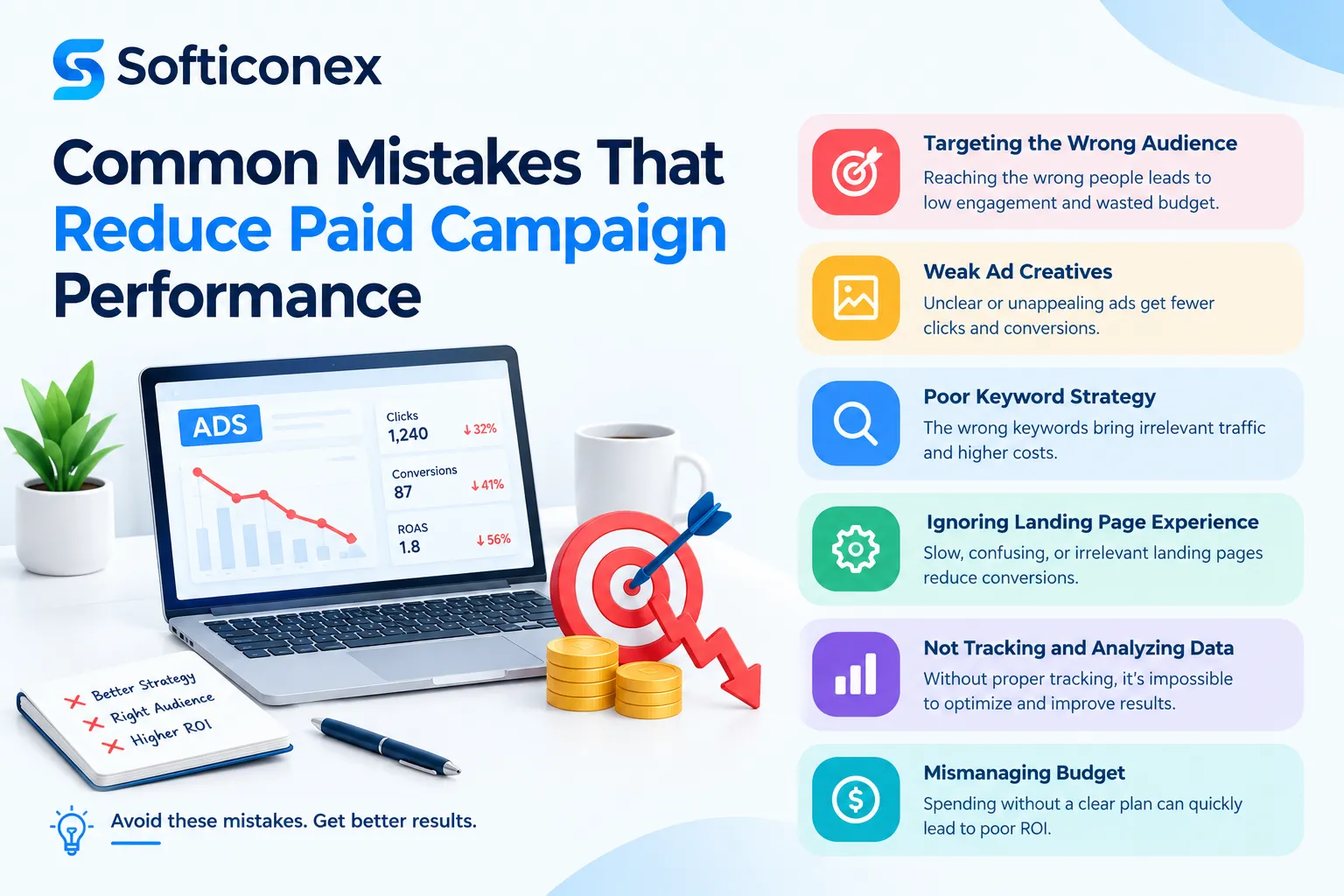
Common mistakes in paid campaigns that make them less effective
1. Poor audience targeting and segmentation
One of the biggest mistakes businesses make is targeting large audiences without understanding customer needs. Showing advertisements to irrelevant users increases costs and decreases conversions.
Effective campaigns require audience segmentation based on:
- Demographics
- Location
- Interests
- Online behavior
- Previous purchases
- Customer preferences
Segmented audiences allow businesses to create more personalized advertisements that connect better with potential customers.
2. Using generic ad copy and weak creatives
Even with accurate targeting, advertisements can fail if they do not attract attention. Generic headlines, unclear messages, and low-quality visuals can reduce engagement.
Effective advertisements should clearly communicate:
- The problem being solved
- The value of the product or service
- Why customers should choose the brand
- The next action users should take
Strong creatives include clear headlines, attractive visuals, consistent branding, and powerful calls-to-action.
Testing different ad variations helps identify the most successful approach.
3. Ignoring mobile optimization
Since many users access online content through mobile devices, businesses must ensure their advertisements and landing pages provide a smooth mobile experience.
Poor mobile optimization can lead to:
- Slow-loading pages
- Difficult navigation
- Higher bounce rates
- Lower conversion rates
Businesses should focus on responsive designs, fast-loading pages, simple forms, and easy checkout processes.
4. Measuring vanity metrics instead of business results
Many marketers focus only on impressions, likes, or follower growth. While these numbers show visibility, they do not always reflect actual campaign success.
Businesses should focus on important metrics such as:
- Click-through rate (CTR)
- Conversion rate
- Cost per acquisition (CPA)
- Customer lifetime value (CLV)
- Return on ad spend (ROAS)
- Revenue generated
Tracking meaningful metrics helps businesses understand the real impact of their campaigns.
5. Poor budget management
Incorrect budget allocation can quickly reduce campaign profitability. Some businesses continue investing in advertisements that perform poorly while ignoring campaigns that deliver better results.
Effective budget management includes:
- Reviewing campaign performance regularly
- Reducing ineffective spending
- Increasing investment in successful campaigns
- Testing different bidding strategies
- Adjusting budgets based on performance data
Regular monitoring ensures advertising resources are used efficiently.
6. Not testing and optimizing campaigns
Launching campaigns without ongoing testing can limit their success. Audience preferences, market trends, and advertising algorithms continuously change.
Businesses should test:
- Headlines
- Images and videos
- Audience segments
- Landing pages
- Calls-to-action
- Bidding strategies
A/B testing allows marketers to make decisions based on real performance data rather than assumptions.
Conclusion
Paid Campaigns can greatly contribute to business growth when managed strategically. However, mistakes such as poor targeting, weak creatives, ineffective tracking, budget mismanagement, and lack of optimization can reduce campaign effectiveness and waste valuable resources.
Successful paid campaigns require a combination of audience understanding, strong communication, continuous testing, accurate measurement, and regular optimization.
By avoiding common advertising mistakes and focusing on customer needs, businesses can improve campaign efficiency, increase conversions, and achieve stronger returns on their advertising investment. Paid campaigns are not simply about spending money for visibility, it is about delivering the right message to the right audience at the right moment.