Most people can follow instructions. Far fewer can figure out why the instructions are wrong.
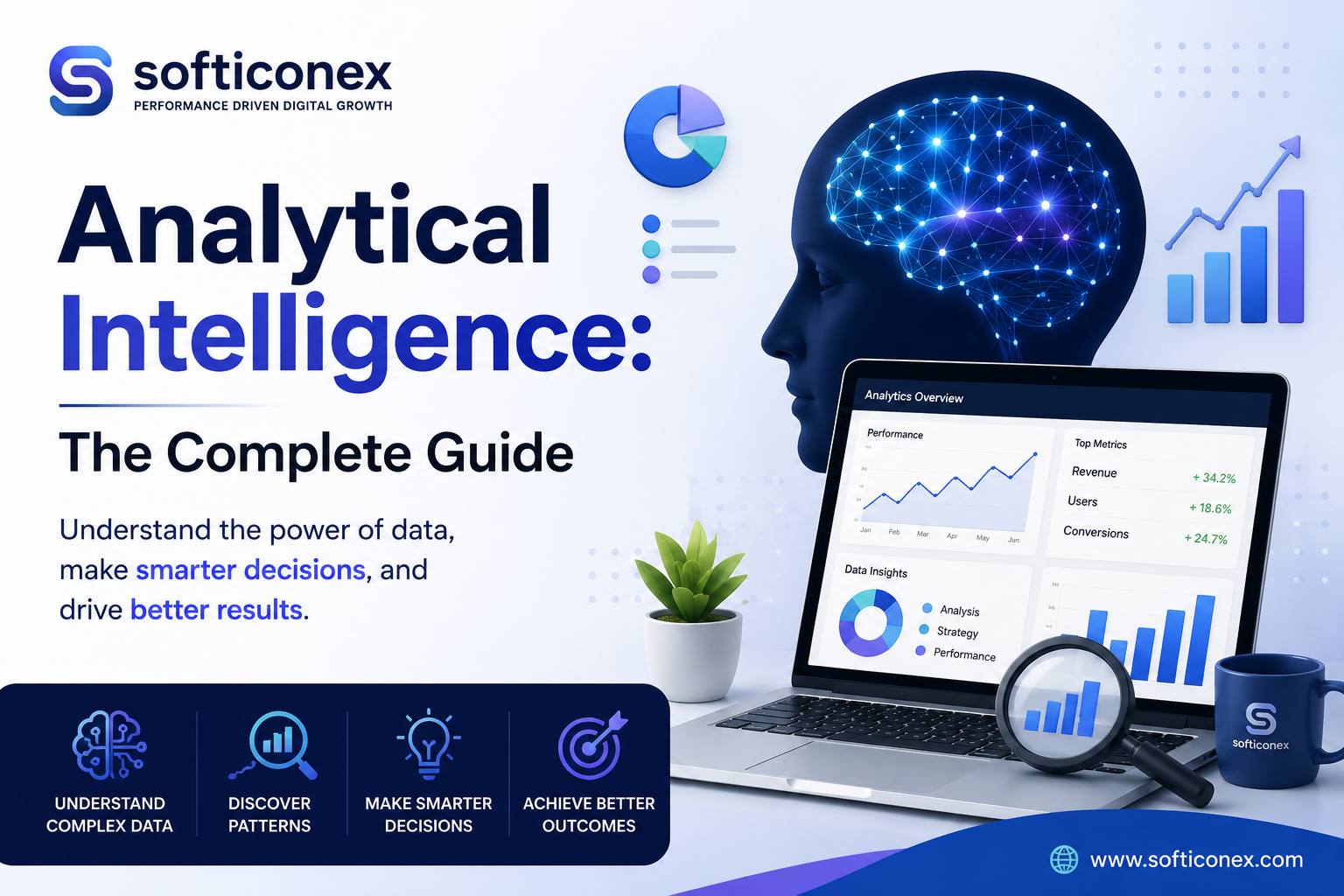
That gap between executing and reasoning is where analytical intelligence lives. Analytical intelligence is the cognitive ability to break down complex problems, evaluate evidence critically, and reach well-supported conclusions. It is the mental engine behind effective decision-making, academic achievement, and career advancement.
Yet most educational systems treat analytical thinking as a byproduct of learning rather than a skill to develop deliberately. As a result, many students and professionals underperform not because they lack knowledge, but because they lack the structured reasoning skills to deploy that knowledge effectively.
This guide covers everything you need to know about analytical intelligence: what it is, how it differs from related cognitive skills, what it looks like in practice, and most importantly, how to strengthen it. Whether you’re a student preparing for competitive exams, a professional navigating complex decisions, or a job seeker who wants to stand out, this guide gives you a clear, actionable framework.
What Is Analytical Intelligence?
Analytical intelligence is the capacity to process information systematically, identify logical relationships, and solve problems through reasoning rather than intuition or memorization. The concept was formally introduced by psychologist Robert J. Sternberg in his Triarchic Theory of Intelligence, published in 1985.
Sternberg defined three types of human intelligence:
- Analytical intelligence: The ability to analyze, evaluate, compare, and judge information
- Creative intelligence: The ability to generate novel ideas and think outside established patterns
- Practical intelligence: The ability to apply knowledge effectively in real-world situations
Analytical intelligence corresponds most closely to what people call “book smarts” or academic aptitude. Analytical intelligence is also the type of cognitive intelligence most commonly measured by IQ tests, standardized aptitude assessments, and competitive entrance exams such as the GMAT, LSAT, and GRE.
Core Components of Analytical Intelligence
Analytical intelligence is not a single skill; it is a cluster of interrelated cognitive abilities:
- Logical reasoning: Drawing valid conclusions from a set of premises
- Pattern recognition: Identifying regularities, trends, and anomalies in data or information
- Critical evaluation: Assessing the quality, credibility, and relevance of evidence
- Deductive and inductive thinking: Moving from general principles to specific conclusions, and vice versa
- Problem decomposition: Breaking complex problems into manageable sub-problems
- Quantitative reasoning: Applying mathematical and statistical logic to real-world scenarios
Analytical Intelligence vs. Other Types of Intelligence
Understanding analytical intelligence requires situating it among related concepts in cognitive psychology.
Analytical Intelligence vs. IQ
IQ (Intelligence Quotient) measures a broad range of cognitive abilities, including verbal comprehension, working memory, processing speed, and perceptual reasoning. Analytical intelligence overlaps heavily with the “fluid intelligence” component of IQ, the ability to reason with novel problems, independent of prior knowledge.
However, IQ is a composite score. A person can have a high IQ with relatively weaker analytical reasoning, and vice versa. Analytical intelligence assessments tend to isolate reasoning ability more specifically than general IQ tests.
Analytical Intelligence vs. Emotional Intelligence
Emotional intelligence (EQ) refers to the ability to perceive, understand, and manage emotions in oneself and others. Analytical intelligence and emotional intelligence are distinct but complementary. High-performing professionals typically need both: analytical intelligence to solve problems and emotional intelligence to communicate solutions and lead teams.
Research from TalentSmart (2023) found that EQ accounts for 58% of performance across all job types, but analytical intelligence remains the primary predictor of performance in roles requiring complex reasoning (consulting, law, engineering, data science).
Analytical Intelligence vs. Creative Intelligence
Creative intelligence generates new ideas; analytical intelligence evaluates them. The two types of cognitive intelligence work in sequence: creative thinking produces options, and analytical thinking filters and refines those options through logic and evidence. Neither type alone produces optimal outcomes.
Why Analytical Intelligence Matters in Work and Life
In Academic Contexts
Analytical intelligence is the primary cognitive driver of academic success in quantitative and reasoning-heavy disciplines. Students with strong analytical skills outperform peers on standardized tests, research projects, and case-based assessments, not because they study harder, but because they process information more efficiently. Before those research projects are turned in, running them past the plagiarism checker built for academia is a simple way to confirm the analysis is genuinely their own work.
The College Board’s SAT redesign in 2016 explicitly shifted toward measuring analytical reasoning rather than vocabulary recall, reflecting the growing consensus among educators that problem-solving intelligence matters more than memorization.
In Professional Contexts
Employers across industries rank analytical thinking as a top-three skill requirement in job postings. According to the World Economic Forum’s Future of Jobs Report (2026), analytical thinking and complex problem solving are the most in-demand skills globally, ahead of creativity, digital literacy, and communication.
Roles that explicitly require high analytical intelligence include:
- Data science and analytics
- Management consulting
- Financial analysis and investment
- Legal practice and policy analysis
- Engineering and systems design
- Academic research
- Medical diagnosis and clinical reasoning
In Everyday Decision-Making
Analytical intelligence isn’t reserved for high-stakes professional settings. Analytical reasoning shapes everyday decisions: evaluating a contract before signing, assessing conflicting health information, comparing financial options, or diagnosing why a home appliance stopped working. Stronger analytical skills lead to better personal decisions across every domain.
Analytical Intelligence Examples in Real-World Contexts
Analytical intelligence examples help clarify what this cognitive ability looks like in practice, not just in theory.
The Data Analyst
A marketing analyst receives declining click-through rate data across four ad campaigns. Rather than concluding “the ads don’t work,” an analytically intelligent response involves segmenting the data by device, time of day, audience demographic, and creative version, then hypothesizing specific causal factors for each segment’s performance. The analyst isolates one variable at a time, runs controlled comparisons, and reaches a specific, testable conclusion.
The Medical Professional
A physician evaluating a patient with ambiguous symptoms demonstrates analytical intelligence by generating a differential diagnosis, a ranked list of possible conditions ordered by probability and urgency rather than anchoring on the most obvious explanation. Analytical intelligence in medicine directly prevents diagnostic errors, which the National Academy of Medicine estimates affect approximately 12 million Americans per year.
The Law Student
On a bar exam essay, analytical intelligence manifests as the ability to apply legal rules to novel fact patterns, not merely recite the rules. A high-scoring answer identifies the relevant legal issue, applies the controlling rule, analyzes how the facts support or undermine each element, and reaches a supported conclusion. This IRAC (Issue, Rule, Analysis, Conclusion) structure is analytical reasoning formalized.
The Job Seeker
During a case interview at a consulting firm, a candidate is asked how many piano tuners operate in Chicago. The question has no single correct answer. The interviewer evaluates whether the candidate can decompose an ambiguous problem into logical sub-components (Chicago’s population → household density → piano ownership rates → tuning frequency → tuner capacity). This is a direct test of analytical intelligence in professional hiring.
How to Develop Analytical Intelligence
Analytical intelligence is trainable. Cognitive neuroscience research confirms that deliberate practice in reasoning tasks produces measurable improvements in working memory, fluid reasoning, and problem decomposition, the core components of analytical intelligence.
Practice Structured Problem Decomposition
Choose any complex problem, professional, personal, or hypothetical and deliberately break it into sub-problems before attempting a solution. Ask:
- What exactly is the problem? (Define it precisely)
- What information is relevant? What is irrelevant?
- What are the possible causes or contributing factors?
- Which factors can I measure, test, or eliminate?
This habit, practiced daily, strengthens the logical thinking skills that underpin analytical intelligence.
Study Formal Logic and Argument Structure
Formal logic training, even at an introductory level, directly improves deductive reasoning. Work through a course in critical thinking or informal logic (MIT OpenCourseWare offers free materials). Learn to identify common logical fallacies: ad hominem, straw man, false dichotomy, post hoc reasoning. Recognizing flawed arguments sharpens the ability to construct valid ones.
Engage with Quantitative Reasoning Practice
IQ analytical skills improve with regular quantitative practice. Use resources such as:
- GRE/GMAT quantitative practice sets: Designed specifically to measure problem-solving intelligence
- Khan Academy: Free structured math and reasoning courses from arithmetic through statistics
- Brilliant.org: Interactive problems in logic, math, and data reasoning
- LeetCode (logic problems): Structured coding puzzles that develop algorithmic thinking
Aim for 20–30 minutes of focused quantitative reasoning practice daily over 90 days. Research from the journal Intelligence (Jaeggi et al., 2008) found that working memory training, which overlaps with quantitative reasoning practice, produced significant fluid intelligence gains after 19 days of structured exercise.
Read Analytically, Not Passively
Passive reading absorbs information. Analytical reading interrogates it. Practice interrogative reading by asking:
- What claim is this author making?
- What evidence supports that claim?
- Is the evidence sufficient? Is it from a credible source?
- What counterarguments does the author ignore?
- What conclusions follow and what conclusions do not follow from this evidence?
Apply this framework to news articles, research papers, and long-form essays. Over time, interrogative reading becomes automatic.
Solve Logic Puzzles and Case Problems
Logic puzzles, lateral thinking problems, and business case problems directly exercise analytical intelligence. Resources include:
- Mensa puzzle books: Structured IQ-style reasoning challenges
- Case in Point (Marc Cosentino): The standard guide to consulting case problems
- The Economist’s data puzzles: Real-world analytical reasoning with current data
- Project Euler: Mathematical reasoning challenges for quantitative thinkers
Solve one problem per day in a dedicated practice session. Keep a journal of your reasoning process, not just your answers.
How Analytical Intelligence Is Measured
Standardized Tests
Analytical intelligence maps closely to several widely used standardized assessments:
- Raven’s Progressive Matrices: The gold standard for measuring fluid reasoning and pattern recognition, independent of language and cultural background
- GMAT (Graduate Management Admission Test): Integrated reasoning and quantitative sections directly measure analytical intelligence for business school admissions
- LSAT (Law School Admission Test): Logical reasoning and analytical reasoning sections are explicit measures of cognitive intelligence for legal aptitude
- GRE Analytical Writing: Measures the ability to evaluate arguments and construct evidence-based analyses
Workplace Assessments
Employers increasingly use cognitive ability assessments as part of hiring:
- Criteria Cognitive Aptitude Test (CCAT): Widely used in tech and finance hiring
- Hogan Business Reasoning Inventory: Assesses qualitative and quantitative reasoning for managerial roles
- Wonderlic Personnel Test: Brief cognitive ability test used across industries
Informal Self-Assessment
While not scientifically validated, informal indicators of high analytical intelligence include: the habit of asking “why” and “how do we know” before accepting claims, comfort with ambiguity and incomplete information, and a natural tendency to seek counterevidence before committing to conclusions.
Conclusion
Analytical intelligence is not a fixed trait you either have or don’t. It is a developed capability that responds directly to deliberate, structured practice.
The students who score highest on competitive exams aren’t smarter in any fixed sense. They’ve built stronger reasoning habits. The professionals who rise fastest in analytical fields aren’t luckier; they’ve trained their logical thinking skills to the point where structured problem decomposition becomes automatic.
The framework in this guide gives you everything you need to start: an understanding of what analytical intelligence is, why analytical intelligence matters, and a concrete 90-day development path grounded in published research and real outcomes.
FAQS
What is analytical intelligence in psychology?
In psychology, analytical intelligence is one of three intelligences described in Robert Sternberg’s Triarchic Theory of Intelligence (1985). Analytical intelligence refers to the ability to analyze, evaluate, compare, and contrast information, particularly in academic and problem-solving contexts. Analytical intelligence is the type of cognitive ability most closely measured by traditional IQ tests and standardized aptitude assessments.
Can analytical intelligence be improved?
Yes. Analytical intelligence, particularly the fluid reasoning component, is trainable through deliberate practice. Structured activities, including logic puzzles, quantitative reasoning exercises, formal argument analysis, and case-based problem solving, have all demonstrated measurable improvements in reasoning ability. Research suggests consistent daily practice over a minimum of 19–90 days produces the most significant gains.
What are the best examples of analytical intelligence?
Analytical intelligence examples include: a data analyst segmenting performance data to isolate causal variables; a physician generating a differential diagnosis; a law student applying legal rules to novel fact patterns; a consultant decomposing an ambiguous business problem into measurable components; and a student evaluating conflicting sources before forming a research argument.
How does analytical intelligence differ from IQ?
IQ is a composite cognitive score measuring verbal comprehension, working memory, processing speed, and perceptual reasoning. Analytical intelligence maps most closely to the fluid reasoning component of IQ, the ability to solve novel problems through logic, independent of prior knowledge. A person can have a high composite IQ score with relatively weaker analytical reasoning if other cognitive components (such as verbal ability) are especially strong.
What jobs require the highest analytical intelligence?
Roles that demand the strongest analytical intelligence include: data science and machine learning engineering, management consulting, financial analysis and quantitative trading, legal practice, medical diagnosis, academic research, systems engineering, and policy analysis. These roles require not just knowledge application but active reasoning under ambiguity and time pressure.
How is analytical intelligence tested in job interviews?
Employers test analytical intelligence through several methods: cognitive aptitude assessments (CCAT, Wonderlic), consulting-style case interviews requiring problem decomposition and structured reasoning, numerical reasoning tests, and situational judgment scenarios that require evaluating trade-offs. The most predictive method for complex roles is the structured case interview, which directly observes reasoning in real time.