Cloud computing has quietly become the backbone of almost every digital experience we use today from streaming a video to running a multinational payroll system. Whether you’re a startup founder trying to launch fast without buying servers, or an enterprise IT leader modernizing legacy infrastructure, understanding cloud computing services is no longer optional. This guide breaks down everything you need to know: what cloud computing is, what its services include, why they matter, how they drive business growth, and a detailed comparison of the top providers in the market.
What Is Cloud Computing?
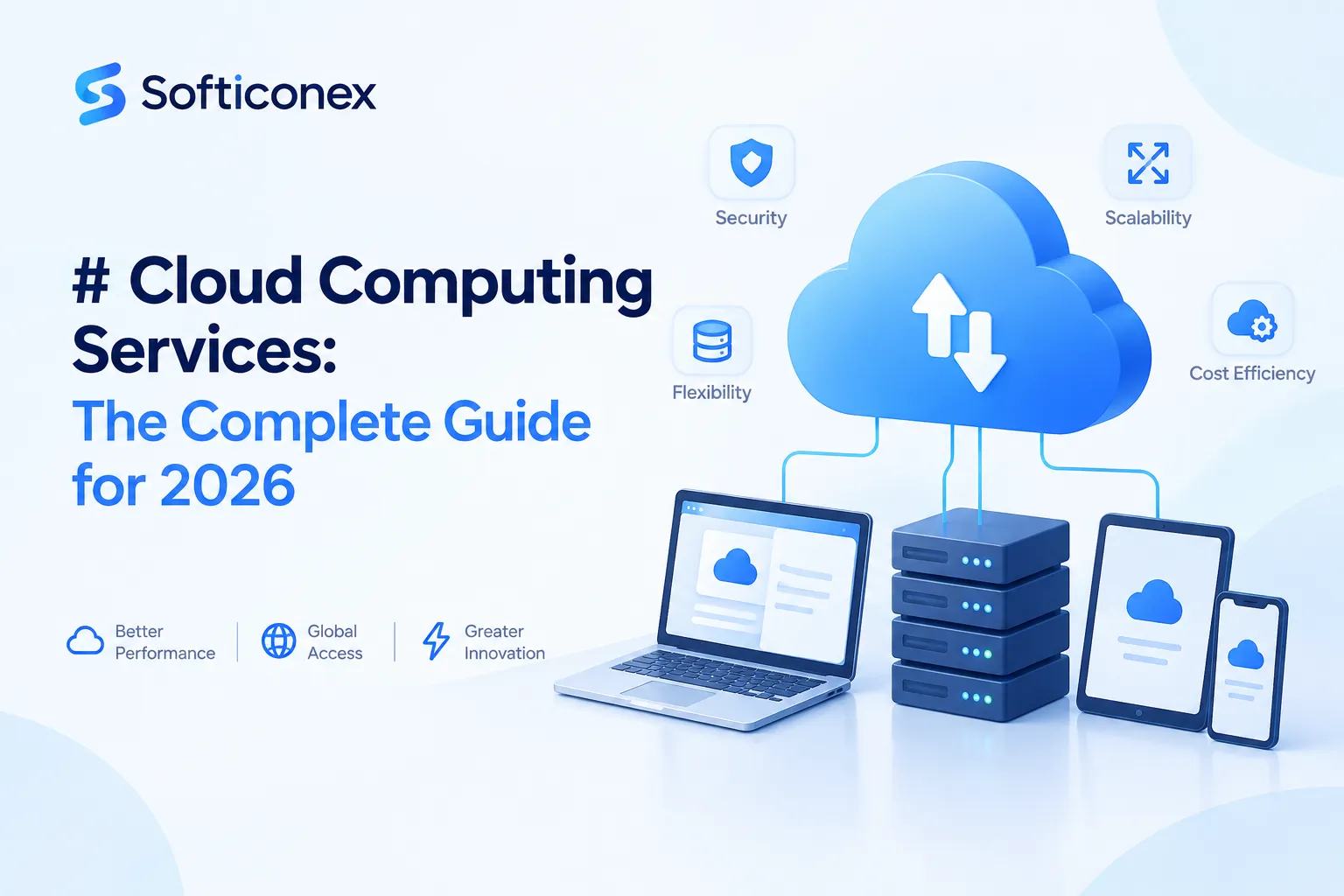
Cloud computing is the delivery of computing resources, servers, storage, databases, networking, software, and analytics over the internet (“the cloud”) instead of owning and maintaining physical hardware on-site.
Instead of buying a server, installing an operating system, configuring networking, and hiring a team to maintain it, a business can simply rent computing power from a cloud provider and pay only for what it uses. The provider owns and manages the physical data centers, while the customer accesses resources remotely through the internet, typically via a web console, API, or command-line tool.
In simple terms: cloud computing lets you use someone else’s powerful, professionally managed infrastructure on demand, instead of building and running your own.
Key Characteristics of Cloud Computing
- On-demand self-service: Resources can be provisioned instantly without human interaction with the provider.
- Broad network access:Services are accessible from anywhere with an internet connection.
- Resource pooling: Providers serve multiple customers from shared physical infrastructure, allocated dynamically.
- Rapid elasticity: Computing power can scale up or down automatically based on demand.
- Measured/pay-as-you-go service: Usage is metered, and customers pay only for what they consume.
What Are Cloud Computing Services?
Cloud computing services are the specific products and capabilities that cloud providers offer to businesses and individuals things like virtual servers, managed databases, storage buckets, AI tools, networking, and ready-made software applications.
These services are generally grouped into three main models:
- Infrastructure as a Service (IaaS): Rented virtual machines, storage, and networking (e.g., Amazon EC2, Google Compute Engine).
- Platform as a Service (PaaS): A ready-made environment for building and deploying applications without managing the underlying servers (e.g., Google App Engine, Azure App Service).
- Software as a Service (SaaS): Fully built applications delivered over the internet, ready to use (e.g., Gmail, Salesforce, Dropbox).
A fourth, increasingly common category is Function as a Service (FaaS) or serverless computing, where developers deploy small pieces of code that run automatically in response to events, without provisioning or managing servers at all (e.g., AWS Lambda, Google Cloud Functions).
What Is Included in Cloud Computing Services?
Cloud computing services span a wide ecosystem of tools and capabilities. Here’s what typically falls under this umbrella:
- Compute: Virtual machines, container services, and serverless functions for running applications.
- Storage: Object storage, block storage, file storage, and archival/cold storage for backups.
- Databases: Managed relational databases (SQL) and non-relational databases (NoSQL), often with automated backups and scaling.
- Networking: Virtual private networks, load balancers, content delivery networks (CDNs), and DNS management.
- Security & Identity: Identity and access management (IAM), encryption, firewalls, and compliance tools.
- AI and Machine Learning: Pre-trained models, model training platforms, and APIs for vision, speech, and language processing.
- Analytics & Big Data: Data warehouses, data lakes, and business intelligence tools for processing large datasets.
- Developer Tools: CI/CD pipelines, code repositories, monitoring, and application performance management.
- IoT Services: Platforms to connect, manage, and analyze data from internet-of-things devices.
- Disaster Recovery & Backup: Automated, geographically distributed backup and failover systems.
Why Cloud Computing Services Matter
Cloud computing services matter because they fundamentally change the economics and speed of building and running technology. Here’s why they’ve become essential:
- Cost efficiency: No upfront investment in physical hardware; you pay only for what you use, converting large capital expenses into predictable operating expenses.
- Scalability: Resources can expand or shrink instantly to match real-world demand, avoiding both overpaying for idle capacity and running out of capacity during spikes.
- Speed and agility: New servers, databases, or environments can be spun up in minutes instead of the weeks it once took to procure physical hardware.
- Global reach: Businesses can deploy applications closer to their customers around the world using globally distributed data centers, improving speed and user experience.
- Reliability and uptime: Major providers offer redundant infrastructure across multiple data centers, reducing the risk of downtime from a single point of failure.
- Focus on core business: Companies no longer need large in-house teams just to keep servers running; they can focus talent and budget on their actual product.
- Continuous innovation: Cloud providers constantly roll out new tools (AI, analytics, automation) that customers can adopt without building them from scratch.
How Cloud Computing Services Help Businesses Grow and Run Smoothly
1. Lower Barriers to Entry
Startups no longer need massive upfront capital to launch a digital product. A small team can build and scale a global application using only a laptop and a cloud account.
2. Faster Time to Market
Pre-built services, databases, authentication, messaging, AI models mean developers spend less time on infrastructure and more time building features that matter to customers.
3. Elastic Scaling During Growth or Spikes
An e-commerce site can automatically add server capacity during a holiday sale and scale back down afterward, avoiding both crashes and wasted spending.
4. Business Continuity and Disaster Recovery
Cloud providers replicate data across multiple regions, so a hardware failure or even a natural disaster in one location doesn’t bring the business to a halt.
5. Remote Work and Collaboration
Cloud-based tools (file storage, communication platforms, shared databases) allow distributed teams to work together seamlessly from anywhere in the world.
6. Data-Driven Decision Making
Built-in analytics and AI tools let businesses of any size analyze customer behavior, forecast demand, and personalize experiences capabilities once reserved for large enterprises with dedicated data teams.
7. Improved Security Posture
Leading providers invest billions in security infrastructure, threat detection, and compliance certifications, giving smaller businesses access to enterprise-grade protection they couldn’t build alone.
8. Global Expansion Made Simple
A business can launch in a new country by deploying its application to a nearby cloud data center, instantly improving performance for new customers without building physical infrastructure there.
Types of Cloud Deployment Models
Beyond service types, businesses also choose how their cloud environment is structured:
- Public Cloud: Infrastructure shared across multiple customers, managed entirely by the provider (AWS, Azure, GCP). Most cost-effective and scalable.
- Private Cloud: Dedicated infrastructure used by a single organization, offering more control and customization, often for regulatory or security reasons.
- Hybrid Cloud: A mix of private and public cloud, allowing sensitive workloads to stay on private infrastructure while less sensitive workloads run on public cloud.
- Multi-Cloud: Using services from more than one cloud provider simultaneously to avoid vendor lock-in, optimize costs, or leverage each provider’s strengths.
Top Cloud Computing Services Providers: Comparison Table
Below is a comparison of 20+ leading cloud computing service providers based on their core strengths, primary service focus, and typical use cases.
| # | Provider | Founded | Core Strength | Best For | Pricing Model |
| 1 | Amazon Web Services (AWS) | 2006 | Broadest service catalog | Enterprises, startups, all workloads | Pay-as-you-go |
| 2 | Microsoft Azure | 2010 | Enterprise & Microsoft integration | Businesses using Windows/Office ecosystem | Pay-as-you-go |
| 3 | Google Cloud Platform (GCP) | 2008 | Data analytics & AI/ML | Data-heavy and AI-driven applications | Pay-as-you-go |
| 4 | IBM Cloud | 2011 | Hybrid cloud & enterprise AI | Large enterprises, regulated industries | Pay-as-you-go/subscription |
| 5 | Oracle Cloud Infrastructure (OCI) | 2016 | Databases & enterprise apps | Oracle database users, ERP workloads | Pay-as-you-go |
| 6 | Alibaba Cloud | 2009 | Asia-Pacific market reach | Businesses expanding into China/Asia | Pay-as-you-go |
| 7 | Salesforce Cloud | 1999 | CRM & customer-facing SaaS | Sales, marketing, and service teams | Subscription |
| 8 | DigitalOcean | 2011 | Simplicity for developers | Small teams, indie developers | Pay-as-you-go |
| 9 | Rackspace Technology | 1998 | Managed cloud services | Businesses wanting fully managed support | Subscription |
| 10 | VMware Cloud | 1998 | Virtualization & private cloud | Enterprises with existing VMware infrastructure | Subscription |
| 11 | Tencent Cloud | 2013 | Gaming & social media infrastructure | Gaming companies, Chinese market | Pay-as-you-go |
| 12 | Akamai (Linode) | 1999/2003 | Edge computing & CDN | Developers needing simple, affordable VMs | Pay-as-you-go |
| 13 | OVHcloud | 1999 | European data sovereignty | EU-based businesses, cost-conscious teams | Pay-as-you-go |
| 14 | Vultr | 2014 | High-performance cloud compute | Developers needing global, fast deployment | Pay-as-you-go |
| 15 | Hetzner Cloud | 1997 | Low-cost European hosting | Budget-conscious developers and startups | Pay-as-you-go |
| 16 | Cloudflare | 2009 | Edge network, security, CDN | Website performance and DDoS protection | Freemium/subscription |
| 17 | IONOS Cloud | 1988 | SMB-focused hosting & cloud | Small and medium businesses | Subscription |
| 18 | Kamatera | 2005 | Customizable cloud servers | Businesses needing flexible configurations | Pay-as-you-go |
| 19 | Lumen Technologies (CenturyLink Cloud) | 1968 | Enterprise networking & edge | Telecom-integrated enterprise workloads | Subscription |
| 20 | SAP Cloud Platform | 1972 | Enterprise resource planning | Businesses using SAP ERP systems | Subscription |
| 21 | Wasabi | 2015 | Low-cost cloud storage | Businesses needing affordable backup/archival storage | Pay-as-you-go |
| 22 | Scaleway | 1999 | European developer cloud | Startups and developers in Europe | Pay-as-you-go |
Detailed Look at Each Cloud Computing Services Provider
1. Amazon Web Services (AWS): AWS is the largest cloud provider in the world, offering more than 200 services spanning compute, storage, databases, machine learning, IoT, and more. Its massive global infrastructure and mature ecosystem make it a default choice for businesses of every size, from solo developers to Fortune 500 companies.
2. Microsoft Azure: Azure is especially strong for organizations already using Microsoft products like Windows Server, Active Directory, and Office 365. It offers deep hybrid cloud capabilities, making it popular with large enterprises transitioning gradually from on-premises systems.
3. Google Cloud Platform (GCP): GCP stands out for its data analytics, machine learning, and Kubernetes container orchestration (which Google originally created). It’s a favorite among data science teams and companies building AI-powered products.
4. IBM Cloud: IBM Cloud focuses heavily on hybrid cloud and enterprise AI through its Watson platform. It’s commonly used by regulated industries like banking, insurance, and healthcare that need strong compliance and legacy system integration.
5. Oracle Cloud Infrastructure (OCI): OCI is built around high-performance database workloads and is the natural choice for businesses already running Oracle databases or enterprise resource planning (ERP) systems, offering competitive pricing for compute-heavy tasks.
6. Alibaba Cloud: As the leading cloud provider in China and much of Asia-Pacific, Alibaba Cloud is the go-to choice for businesses expanding into these markets, offering local data centers and compliance with regional regulations.
7. Salesforce Cloud: Primarily a SaaS platform rather than raw infrastructure, Salesforce Cloud provides customer relationship management (CRM), marketing automation, and customer service tools used by sales-driven organizations worldwide.
8. DigitalOcean: DigitalOcean is known for its clean, simple interface and developer-friendly pricing, making it a popular choice among individual developers, small startups, and teams that don’t need the complexity of hyperscale providers.
9. Rackspace Technology: Rackspace differentiates itself through fully managed services; it doesn’t just provide infrastructure but also manages, monitors, and optimizes it on the customer’s behalf, appealing to businesses without large internal IT teams.
10. VMware Cloud: VMware is deeply embedded in enterprise data centers through its virtualization technology. VMware Cloud lets businesses extend their existing on-premises VMware environments into the cloud with minimal changes.
11. Tencent Cloud: Tencent Cloud powers much of China’s gaming and social media infrastructure, including WeChat. It’s a strong option for gaming companies and businesses targeting Chinese-speaking audiences.
12. Akamai (Linode): After Akamai’s acquisition of Linode, the combined platform pairs simple, affordable virtual servers with Akamai’s global edge network, making it attractive for developers who want performance without complexity.
13. OVHcloud: As a European-based provider, OVHcloud emphasizes data sovereignty and privacy compliance under EU regulations, making it appealing to businesses that need to keep data within Europe.
14. Vultr: Vultr offers high-performance cloud compute instances across a large number of global data center locations, popular among developers who need fast deployment with minimal setup.
15. Hetzner Cloud: Hetzner is known for offering some of the most competitively priced cloud servers in Europe, making it a favorite for budget-conscious startups and hobbyist developers.
16. Cloudflare: While not a traditional infrastructure provider, Cloudflare’s global edge network offers CDN, DDoS protection, and serverless computing (Cloudflare Workers), making websites faster and more secure.
17. IONOS Cloud: IONOS focuses on small and medium businesses, offering an accessible entry point into cloud services alongside its traditional web hosting and domain services.
18. Kamatera: Kamatera allows highly customizable server configurations, letting businesses fine-tune CPU, RAM, and storage independently useful for workloads with unusual resource requirements.
19. Lumen Technologies (CenturyLink Cloud): Lumen combines cloud services with its extensive telecommunications network, making it well-suited for enterprises that need integrated networking and edge computing capabilities.
20. SAP Cloud Platform: SAP’s cloud offerings are built to integrate tightly with its ERP software, serving large enterprises that run their core business operations finance, supply chain, HR on SAP systems.
21. Wasabi: Wasabi specializes purely in cloud object storage at a fraction of the cost of major providers, making it popular for backup, archival, and media storage use cases.
22. Scaleway: A European cloud provider popular among startups and developers, Scaleway offers competitively priced compute and bare-metal servers with a straightforward developer experience.
How to Choose the Right Cloud Computing Services Provider
- Match services to your workload: A data-heavy AI project may favor GCP; an SAP-centric enterprise may favor SAP Cloud or Azure.
- Consider geographic requirements: If your customers or regulations require EU-based data, providers like OVHcloud, Hetzner, or Scaleway are worth prioritizing.
- Evaluate pricing structure: Compare not just headline prices but also costs for data transfer, storage retrieval, and support.
- Check support and SLAs: Managed providers like Rackspace may suit businesses without dedicated IT staff.
- Think about vendor lock-in: Multi-cloud or open-standard tools can reduce dependency on a single provider.
How Softiconex Can Help You Get the Most Out of Cloud Computing
Adopting the right cloud infrastructure is only half the equation. How well your website, app, and security setup are built on top of it matters just as much. This is where a partner like Softiconex comes in. As a full-service digital agency, Softiconex helps businesses build fast, conversion-focused websites and apps that run smoothly on cloud infrastructure, while its Managed SOC Services provide 24/7 monitoring and threat detection to keep cloud-hosted data secure. Whether you’re migrating to the cloud for the first time or optimizing an existing setup, working with an experienced technology partner ensures you get the full growth benefits of cloud computing without the guesswork.
Frequently Asked Questions (FAQs)
1. What is the difference between cloud computing and cloud computing services?
Cloud computing is the overall concept of delivering computing resources over the internet, while cloud computing services are the specific offerings (compute, storage, databases, AI tools, etc.) that make this possible.
2. Which cloud computing service model should a small business choose?
Most small businesses benefit from SaaS for everyday tools (email, CRM, accounting) and PaaS if they’re building a custom application, since it removes the burden of managing servers.
3. Is cloud computing more secure than on-premises infrastructure?
Major cloud providers typically invest more in security infrastructure than most individual businesses can afford, but security also depends on how the customer configures access controls, encryption, and permissions.
4. How much does cloud computing cost?
Costs vary widely based on usage, provider, and services selected. Most providers use a pay-as-you-go model, so costs scale with actual consumption rather than fixed monthly fees.
5. Can a business use more than one cloud provider at once?
Yes, this is called a multi-cloud strategy, and many businesses use it to avoid vendor lock-in, optimize costs, or use each provider’s specific strengths.
6. What is serverless computing?
Serverless computing lets developers run code in response to events without provisioning or managing servers directly; the cloud provider automatically handles scaling and infrastructure.
7. Is cloud computing suitable for large enterprises with legacy systems?
Yes, hybrid cloud solutions allow enterprises to keep sensitive or legacy systems on private infrastructure while moving other workloads to the public cloud gradually.
8. What industries benefit most from cloud computing services?
Virtually every industry benefits, but e-commerce, healthcare, finance, media, gaming, and software companies are among the heaviest adopters due to their scalability and data needs.
9. How does cloud computing support remote work?
Cloud-based storage, communication, and collaboration tools allow employees to access files and applications securely from any location with internet access.
10. What should businesses check before migrating to the cloud?
Businesses should assess data security requirements, compliance obligations, expected costs, required uptime, and whether existing applications need re-architecting for the cloud.
Conclusion
Cloud computing services have transformed how businesses build, launch, and scale technology. By removing the need for expensive physical infrastructure, they let companies of every size access enterprise-grade compute power, storage, security, and AI capabilities on demand. Whether it’s a startup deploying its first application or a multinational enterprise modernizing decades-old systems, cloud computing services now sit at the center of digital growth strategy.
Choosing the right provider depends on your specific workload, budget, geography, and long-term goals but with more than 20 major providers now competing on price, performance, and innovation, businesses have more options than ever to build a cloud strategy that fits their needs precisely.