You published a new blog post. You built a solid backlink. You updated your service page with fresh content. Now you wait and wait and wait for Google to notice. Days pass. Sometimes weeks. And the whole time, your competitors are sitting in positions you worked hard to reach.
This is one of the most frustrating experiences in SEO. And it is also one of the most common.
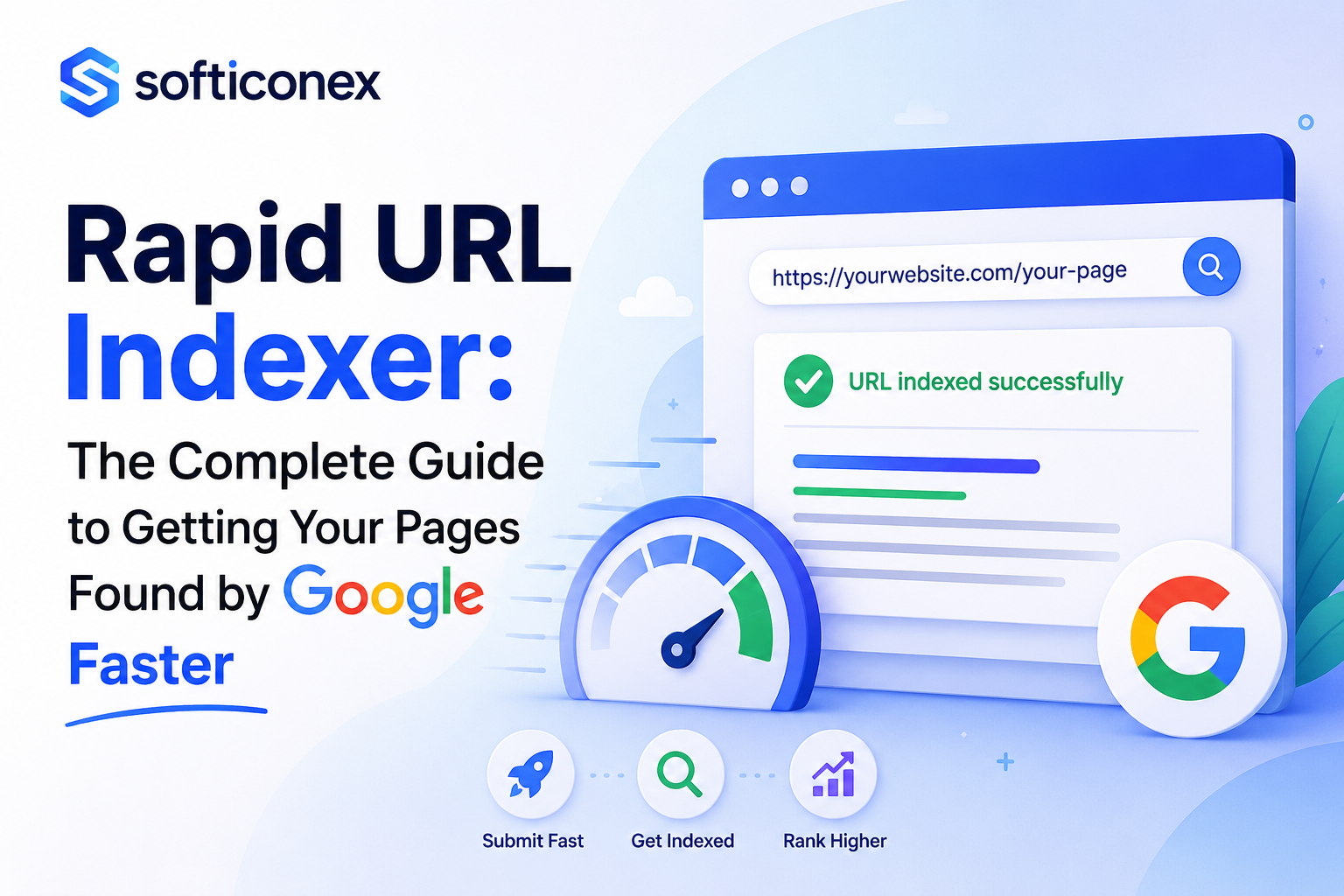
A Rapid URL Indexer solves this exact problem. It tells Google about your pages now, rather than waiting for Google to find them on its own schedule. In this guide, you will learn exactly what a Rapid URL Indexer is, how it works, when to use it, which tools actually deliver results, and how to make it a proper part of your SEO strategy.
What Is a Rapid URL Indexer?
A Rapid URL Indexer is a tool or service that accelerates the process of getting your web pages discovered and stored in Google’s search database. That database is called the Google index. If your page is not in the index, it does not appear in search results full stop.
Under normal circumstances, Google’s crawlers (called Googlebots) roam the internet on their own schedule, following links and discovering new pages over time. For an established, high-authority website, this process might take a few days. For a newer site or a page buried several clicks from the homepage, it can take weeks or even months.
A Rapid URL Indexer skips the waiting. It pushes your URL directly to Google through official or semi-official channels and requests immediate crawling and indexing.
Think of it this way: instead of mailing a letter and hoping it arrives eventually, you walk it directly to the recipient’s desk. The message is the same, but the delivery is dramatically faster.
How Google Indexing Actually Works (And Why It Gets Delayed)
To understand why Rapid URL Indexers matter, you first need to understand why indexing gets delayed in the first place.
It manages a crawl budget with a limit on how many pages it will crawl on any given website within a set time period. This budget depends on factors like your domain authority, server speed, internal linking structure, and how recently your site was updated.
Delays typically happen for these reasons:
• Your website is relatively new and has low domain authority
• The new page sits deep in your site with few internal links pointing to it
• Your XML sitemap is outdated or not properly submitted to Google Search Console
• Google’s crawl queue is backed up and your site is low priority
Each of these situations is common. A Rapid URL Indexer addresses them directly by placing your URL at the front of the line instead of wherever Google’s algorithm would naturally put it.
How a Rapid URL Indexer Works
Different tools use different methods, but the most effective ones combine several approaches:
Google Search Console URL Inspection Tool
This is Google’s own built-in method. You paste your URL into the URL Inspection Tool inside Google Search Console and click ‘Request Indexing.’ Google then adds that URL to its priority crawl queue. It is free, reliable, and directly supported by Google. The limitation is that it handles one URL at a time and has a daily submission cap.
Google Indexing API
Google’s Indexing API was originally designed for job posting and livestream pages, but SEO professionals discovered it triggers faster crawling for other page types as well. Third-party Rapid URL Indexer tools often use this API behind the scenes to submit URLs in bulk, something you cannot easily do manually at scale.
XML Sitemap Pinging
Many indexing tools also ping search engines with your updated XML sitemap, notifying them that new content is available and prompting a fresh crawl of your entire site. This is useful for batch indexing after a content update.
Backlink Seeding
Some advanced indexing services create signals around your URL by building small, fast-indexing pages that link to your target page. When Google crawls those pages, it follows the link and discovers yours. This method is more aggressive and should be used carefully with quality content only.
Rapid URL Indexer vs. Waiting for Google: A Real Comparison
Here is what the experience looks like in practice when you use a Rapid URL Indexer versus relying on Google’s natural crawling:
| Factor | What Actually Happens |
| Without Rapid URL Indexer | New pages can take 2 to 8 weeks to appear in Google — or longer for low-authority sites |
| With Rapid URL Indexer | Most pages get indexed within 24 to 72 hours when submitted correctly |
| Backlinks | Without indexing, backlinks provide zero SEO value until Google crawls them |
| Time-sensitive content | Promotions, events, and news lose relevance before they ever appear in search |
| Competitive edge | Your competitor’s updated page shows up in days while yours waits weeks |
When You Should Use a Rapid URL Indexer
Not every page needs emergency indexing. Use a Rapid URL Indexer strategically in these situations:
When You Publish New Content
Every new blog post, landing page, or service page you publish should be submitted for rapid indexing immediately. Do not let fresh content sit unnoticed for weeks. Submit it the same day you publish it.
When You Build or Earn New Backlinks
A backlink that Google has not crawled yet contributes nothing to your domain authority. When you earn a backlink from a guest post, press mention, or directory listing, submit the linking page and your own target page for indexing. This activates the SEO value of that link as quickly as possible.
When You Update Existing Pages
If you refresh an old article with new statistics, add a new section, or change your pricing page, re-submit the URL. Google needs to re-crawl the updated version to reflect the changes in search results. Without a push, the old cached version may stay in the index for weeks.
When You Launch a New Website
New websites suffer from what SEO professionals call the ‘Google Sandbox effect’ a period where Google is cautious about ranking new domains. You cannot shortcut trust-building, but you can speed up the initial discovery and indexing of your pages so the clock starts sooner.
Before Time-Sensitive Campaigns
If you are running a sale, seasonal promotion, or event-based campaign, submit the campaign page for rapid indexing at least a few days before launch. You want Google to have that page indexed before the campaign starts, not after it ends.
The Best Rapid URL Indexer Tools Available in 2026
Here are the most reliable tools being used by SEO professionals today:
1. Google Search Console
Always begin with Google’s own URL Inspection Tool. It is free, direct, and uses Google’s own infrastructure. Submit your most important URLs here first. The daily limit applies, so reserve it for priority pages. Access it at search.google.com/search-console.
2. Rapid URL Indexer
This is the dedicated tool that matches your keyword exactly, and for good reason it is one of the most widely used third-party indexing services. It uses the Google Indexing API combined with additional crawling signals to index URLs quickly. Users report indexing rates of 70 to 90 percent within 24 to 48 hours. It offers a credit-based pricing model, so you only pay for what you use. It works well for bulk backlink indexing and new content pushes alike.
3. IndexMeNow
IndexMeNow uses a network of high-authority pages and the Indexing API to push URLs through Google’s system. It is a popular choice among link builders who need freshly earned backlinks crawled and counted as quickly as possible.
4. Omega Indexer
Omega Indexer is a bulk-friendly tool that many SEO agencies use for client campaigns. It handles large batches of URLs efficiently and provides reporting on which URLs were successfully indexed, which helps you track results and identify pages that may need extra attention.
5. One Hour Indexing
Despite the ambitious name, indexing times vary, but this service is well-regarded for consistent results. It works particularly well for pages on established domains with good technical SEO foundations. A well-optimized page on a healthy website indexes faster with any tool.
How to Use a Rapid URL Indexer Step by Step
Here is the exact process that experienced SEO practitioners follow:
1. Make sure your page is ready. Do not submit a half-finished page. Ensure the content is complete, properly formatted, and free of technical errors. Check that it is not accidentally blocked by a noindex tag or robots.txt rule.
2. Submit to Google Search Console first. Use the URL Inspection Tool to request indexing directly. This is always your first step.
3. Submit your updated XML sitemap. If the new URL is already in your sitemap, resubmit the sitemap in Search Console to notify Google of the update. If it is not in your sitemap, add it first.
4. Use a third-party Rapid URL Indexer for bulk submissions. For multiple URLs or backlink pages, submit them to a tool like Rapid URL Indexer or Omega Indexer in one batch.
5. Add internal links pointing to the new page. Internal linking is one of the most underrated indexing signals. When already-indexed pages on your site link to the new page, Google follows those links and discovers the new page naturally.
6. Share the URL externally. Share the URL on social media or any active online properties. While social signals are not a direct ranking factor, they create crawlable pathways to your new page.
7. Monitor and verify indexing. Check indexing status in Google Search Console or search ‘site:yourpage.com/url’ in Google. If it is not indexed within 3 to 5 days, investigate your technical SEO before re-submitting.
Why Some Pages Still Refuse to Get Indexed
This is the honest part that most guides skip. A Rapid URL Indexer cannot force Google to index a page that has serious underlying problems. If you submit a URL and it still does not get indexed, one of these issues is likely the cause:
• The page has a ‘noindex’ meta tag check your page source and your SEO plugin settings
• The URL is blocked in your robots.txt file from being crawled
• The page has very thin content that Google does not consider worth indexing
• The page is a near-duplicate of another page on your site
• Your website has serious technical issues like broken redirects or server errors
• The page has no internal or external links pointing to it it is essentially invisible
Fix these issues first. No indexing tool in the world can overcome fundamental technical SEO problems. The tool accelerates discovery; it does not repair broken foundations.
Rapid URL Indexer and Local SEO: A Powerful Combination
If you run a local business, rapid indexing delivers even more value than it does for general websites. Here is why.
Local SEO is highly time-sensitive. When you update your hours, launch a local promotion, add a new service area page, or respond to a seasonal demand, you need that information in front of local searchers immediately, not three weeks from now.
Consider a plumber who adds a ’emergency boiler repair in Manchester’ page in October. If that page takes four weeks to index, they have missed a significant portion of the high-demand winter season. Submit it for rapid indexing the day it goes live, and it is working for them within 48 hours.
For local businesses, rapid indexing also matters for Google Business Profile updates. When you add new photos, update your description, or post a new offer, those updates connect back to your website. The faster your website reflects current information, the more consistent and trustworthy your local presence appears to Google.
Common Mistakes People Make with URL Indexing Tools
Experience in this field teaches you what not to do just as much as what to do. These are the most common mistakes:
Submitting Low-Quality or Thin Pages
If you mass-submit pages with 200 words, no real value, and keyword stuffing, Google will crawl them quickly and then choose not to index them. Worse, this behaviour can train Google to deprioritize future submissions from your domain. Only submit pages worth indexing.
Expecting Indexing to Equal Ranking
Getting indexed is step one. Ranking is a completely separate process that depends on content quality, authority, backlinks, and dozens of other factors. A Rapid URL Indexer gets your page into the competition; it does not guarantee a trophy. Manage expectations accordingly.
Ignoring Technical SEO Before Submitting
Submitting a URL that loads in six seconds, has no mobile optimisation, and sits on a site with poor Core Web Vitals is a wasted submission. Fix the technical issues first, then submit.
Over-Submitting the Same URL
Submitting the same URL ten times to ten different indexing services does not make it index ten times faster. It creates redundant signals and wastes your credits. Submit once through quality channels, then wait and monitor.
Final Thoughts:
A Rapid URL Indexer is not a magic button that bypasses Google’s quality filters and launches your pages straight to position one. Anyone who tells you otherwise is selling a fantasy.
What it genuinely does and does very well is eliminate the unnecessary waiting period between publishing great content and having that content visible in search results. In a competitive market, those lost days and weeks have real cost. Every day your page sits unindexed is a day your competitors hold the ground you worked to claim.
Build the habit into your workflow. Every time you publish a page, update content, or earn a backlink, run the indexing process. Use Google Search Console as your foundation, add a reliable third-party tool for bulk needs, and always pair your submissions with solid technical SEO and strong content.
FAQs:
Is Rapid URL Indexer safe to use?
Yes, when used correctly. Tools that use Google’s official Indexing API or Google Search Console are completely within Google’s guidelines. Aggressive methods that create spammy backlinks to force indexing carry more risk and should be approached with caution. Stick to reputable tools and only submit quality pages.
How long does rapid indexing actually take?
For pages on healthy websites with good technical SEO, most submissions through quality tools result in indexing within 24 to 72 hours. Some pages index within a few hours. Pages with technical issues or thin content may not index at all regardless of the tool used.
Does Google index every URL I submit?
No. Google makes the final decision on what to index. Submitting a URL gets it reviewed; it does not guarantee inclusion. Google may choose not to index pages it considers low quality, duplicate, or not useful to searchers. Typical indexing rates for quality pages through good tools run between 70 and 90 percent.
Can I use a Rapid URL Indexer for backlinks?
Absolutely. This is one of the most valuable use cases. When you earn a backlink, that link does nothing until Google crawls the page it sits on. Submitting the backlink’s source page and your target page for rapid indexing activates the SEO value of that link as quickly as possible.
Does Rapid URL Indexer work for local SEO?
Very effectively. Local businesses benefit enormously from rapid indexing because local searches are often time-sensitive. New service area pages, seasonal offers, and updated business information all perform better when they reach Google’s index quickly rather than weeks after publication.