Warehouses have changed dramatically over the last decade.
Today’s facilities are larger, faster, and more complex than ever before. E-commerce growth, same-day delivery expectations, and global supply chain demands have transformed warehouses from simple storage spaces into high-volume operational hubs. In fact, the global warehousing market is expected to exceed $700 billion in the coming years, while warehouse automation investments continue to grow at record levels.
But with this growth comes a challenge.
A typical warehouse may process thousands of inventory movements every day, operate around the clock, and manage millions of dollars worth of products under one roof. At the same time, inventory shrinkage, theft, unauthorized access, and operational inefficiencies continue to cost businesses billions annually. According to industry estimates, inventory-related losses account for a significant portion of warehouse operating costs, especially in large distribution centers.
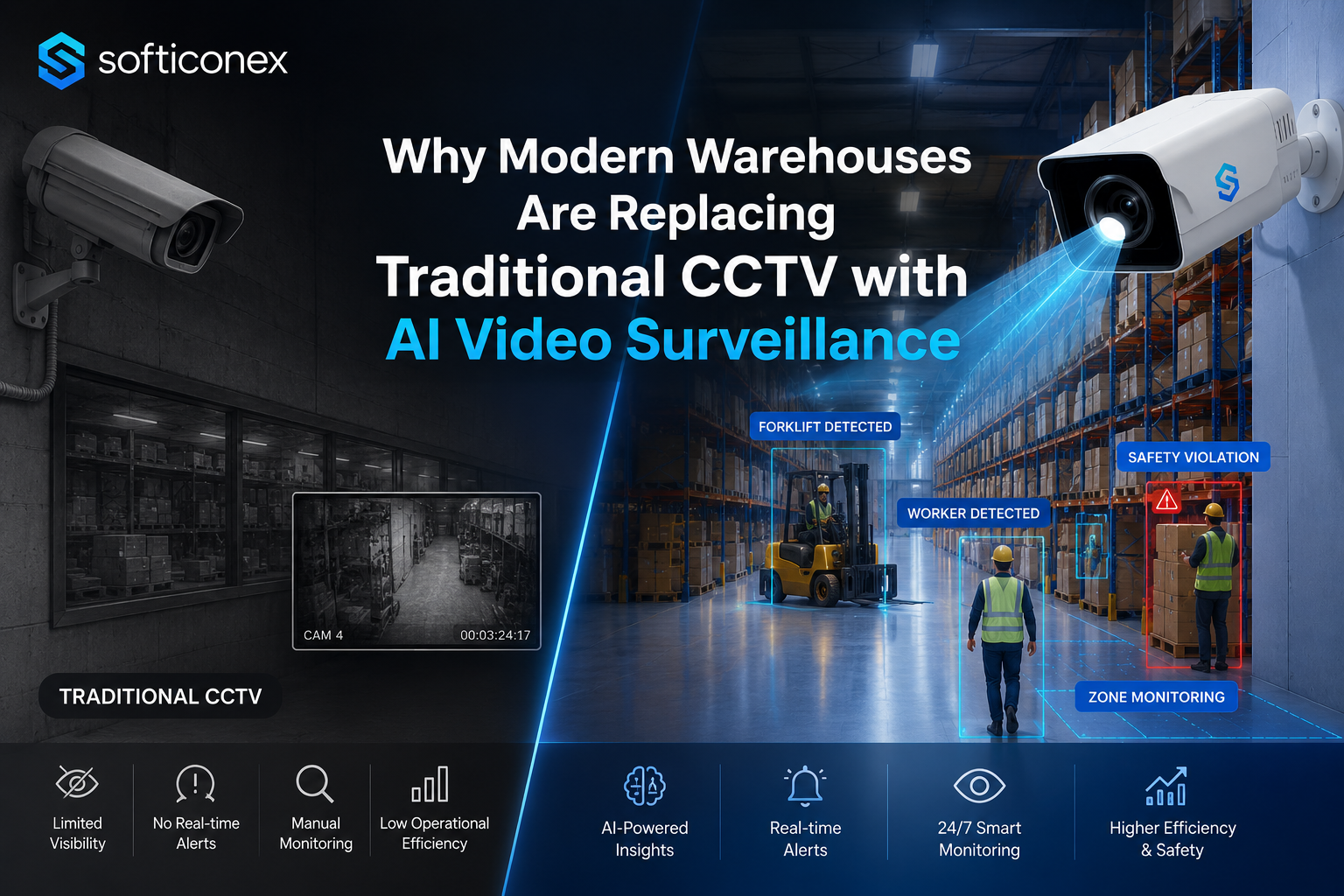
The problem is that traditional CCTV systems were never designed for this environment. They can record events, but they cannot understand them. Security teams are often left reviewing hours of footage after an incident has already happened.
That is why businesses are moving toward AI-powered warehouse video surveillance systems. Instead of simply capturing video, these systems analyze activity in real time, detect unusual behavior, and help teams respond before small issues become costly problems.
In this article, we’ll explore why warehouses are replacing traditional CCTV with AI video surveillance and how this technology is improving both security and operational performance.
Image source
1. Traditional CCTV Records Incidents. AI Helps Prevent Them.
For decades, CCTV has been the standard security solution for warehouses.
The problem is that traditional cameras are largely passive. They record everything, but they do very little to help security teams identify risks as they happen.
When an incident occurs, whether it involves missing inventory, unauthorized access, or equipment misuse, staff often need to spend hours reviewing footage to determine what happened.
AI-powered surveillance changes this approach entirely.
Instead of simply storing video, AI analyzes activity in real time and identifies events that require attention. This allows security teams to focus on meaningful incidents rather than watching endless hours of footage.
For example, AI systems can help identify:
- Unauthorized entry into restricted zones
- Suspicious movement around loading docks
- Individuals remaining in sensitive areas longer than expected
- Unusual activity during non-operational hours
This proactive approach reduces response times and helps warehouses address problems before they escalate.
For facilities managing valuable inventory and high daily traffic, prevention is far more valuable than investigation.
2. AI Improves Visibility Across Large Warehouse Facilities
Modern warehouses are enormous.
Many distribution centers span hundreds of thousands of square feet and contain multiple storage zones, loading areas, packing stations, and employee workspaces. Monitoring all of these areas effectively is nearly impossible with traditional surveillance alone.
This is where AI-powered warehouse video surveillance provides a major advantage. Solutions like Coram demonstrate how modern surveillance systems are evolving. Coram allows warehouses to connect existing IP cameras to a cloud-based platform while adding AI-powered monitoring capabilities. Security teams can receive real-time alerts, monitor activity across multiple facilities, and quickly search footage without manually reviewing hours of recordings.
This enhanced visibility allows operators to:
- Monitor multiple warehouse zones simultaneously
- Identify unusual activity as it occurs
- Track operational activity more efficiently
- Respond faster to security concerns
Rather than creating more work for security teams, AI helps them focus on the events that actually matter.
3. Inventory Loss Prevention Has Become a Top Priority
Inventory is the lifeblood of any warehouse operation.
Even small losses can quickly become significant when multiplied across thousands of products and shipments. Whether caused by theft, misplaced inventory, or process failures, shrinkage directly impacts profitability.
Traditional CCTV can help investigate losses after they occur, but it often provides little assistance in preventing them.
AI surveillance introduces a much more proactive model.
By continuously monitoring warehouse activity, AI systems can identify unusual patterns that may indicate risk. For example, repeated access to a restricted storage area, unusual movement near high-value inventory, or activity outside normal operating hours can trigger immediate alerts.
This helps businesses:
- Reduce inventory shrinkage
- Improve accountability
- Strengthen internal controls
- Investigate incidents faster
As margins become tighter across logistics and distribution industries, reducing preventable losses has become a key business priority.
4. Faster Incident Investigations Save Valuable Time
One of the biggest frustrations with traditional CCTV systems is the amount of time required to review footage.
A single investigation can take hours, especially in facilities with dozens or hundreds of cameras.
Imagine trying to locate a specific event involving:
- A missing pallet
- A damaged shipment
- Unauthorized access
- Equipment misuse
Without intelligent search capabilities, teams often need to manually review footage from multiple cameras and time periods.
AI-powered surveillance significantly reduces this burden.
Modern systems allow users to search footage using descriptions, locations, timestamps, or specific events. This dramatically shortens investigation times and improves response speed.
Instead of spending hours searching for answers, teams can focus on resolving issues and improving operations.
5. Warehouse Safety Is Becoming More Important Than Ever
Security is not the only concern in warehouses.
Employee safety has become a major focus as facilities handle larger workloads, more equipment, and increasingly demanding schedules.
Forklifts, loading docks, conveyor systems, and heavy inventory create environments where accidents can happen quickly.
AI surveillance helps improve safety by monitoring activity and identifying situations that may require attention.
For example, systems can help identify:
- Unsafe movement in restricted areas
- Activity around loading zones
- Unexpected behavior near heavy equipment
- Potential safety violations
This additional layer of visibility supports safer working environments and helps organizations reduce risk.
In many cases, preventing a single serious accident can save significantly more than the cost of the surveillance system itself.
6. AI Supports Multi-Site Warehouse Operations
Many businesses no longer operate a single warehouse.
Large retailers, manufacturers, and logistics providers often manage multiple distribution centers across different regions.
Traditional CCTV systems create challenges in these environments because each location typically operates independently.
AI-powered platforms allow organizations to centralize monitoring across facilities.
This provides several advantages:
- Consistent security standards
- Centralized visibility
- Faster incident response
- Easier management of multiple sites
Instead of relying on separate teams and systems, businesses can monitor operations through a unified platform.
This becomes increasingly valuable as organizations continue expanding their logistics networks.
7. AI Turns Surveillance Into an Operational Tool
Perhaps the biggest difference between traditional CCTV and AI surveillance is that AI creates value beyond security.
Video data can provide insights into how warehouses operate.
Organizations can analyze:
- Traffic patterns
- Loading dock activity
- Workforce movement
- Operational bottlenecks
- Facility utilization
These insights help managers make better decisions about staffing, integrating physical operations into a streamlined AI workflow, and optimizing resource allocation.
In other words, surveillance becomes more than a security expense.
It becomes a business intelligence tool.
As warehouses continue investing in automation and data-driven operations, this added value is becoming increasingly important.
Conclusion
Warehouses are becoming more complex, more automated, and more valuable to business operations.
Traditional CCTV systems still have a role to play, but they are no longer enough on their own. Recording footage after an incident occurs simply does not provide the level of visibility modern warehouses need.
AI-powered warehouse video surveillance offers a smarter approach. It helps prevent losses, improve safety, accelerate investigations, and provide operational insights that traditional systems cannot match.
For warehouse operators looking to improve both security and efficiency, the shift from traditional CCTV to AI surveillance is no longer a future trend.
FAQs
What is warehouse video surveillance?
Warehouse video surveillance refers to security systems used to monitor warehouse operations, inventory, personnel, and facility access.
How is AI surveillance different from traditional CCTV?
Traditional CCTV records footage, while AI surveillance analyzes video in real time to detect unusual activity, generate alerts, and improve operational visibility.
Can AI surveillance work with existing warehouse cameras?
Yes. Many modern platforms are designed to integrate with existing IP camera infrastructure, reducing the need for hardware replacement.
Does AI surveillance help reduce inventory loss?
Yes. AI can detect suspicious activity, monitor sensitive areas, and provide faster investigations, helping reduce theft and shrinkage.
Is AI surveillance only useful for large warehouses?
No. Warehouses of all sizes can benefit from improved visibility, security, and operational insights provided by AI-powered systems.