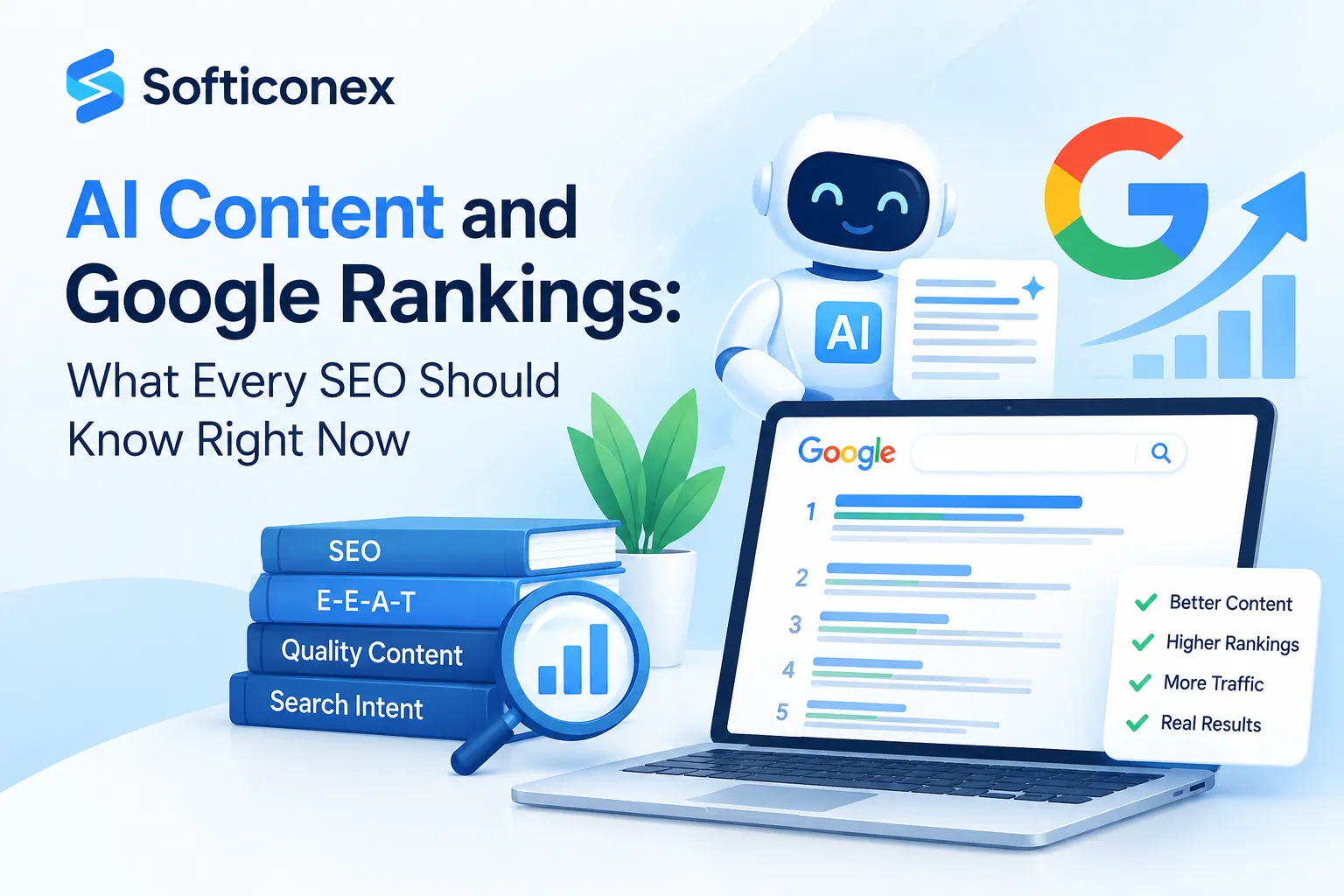
AI has changed everything in terms of your SEO content strategy. You can research several topics, develop outlines for many ideas and also improve and update your upcoming and old articles much faster. But does it mean that they rank better? Not necessarily.
Why do people use AI for content?
The answer is simple: it saves time. If you are an SEO specialist and have multiple clients, working with AI will significantly speed up the monotonous part of your work. The only thing is that you should not compromise the quality of your content just because it is easier to produce it that way.
Google does not penalize or promote your content on the basis of how you used AI.
The search engine evaluates how useful your content is, whether it is accurate and original. It also checks whether your audience can rely on the information in your content and whether it can genuinely help them.
You Should Remember That You Can Rank AI Content
The first thing you should forget when thinking about Google’s attitude towards AI-assisted content. You should not think that Google will automatically deny your content if you use AI.
Google cares more about the quality of your content and what your intention behind making the content is. Therefore, Google rankings may even favor your AI-assisted content if it genuinely meets the needs of your audience.
As an SEO expert, you can use an AI content detector tool as a way to check the quality of your content.
Make sure that you do not have anything inaccurate or irrelevant that your readers need to waste hours on reading.
You can make a difference between good and bad AI by giving attention to how your content is helping others. Google has stated that content created with the help of AI is not automatically inferior, so you should not be worried about using the latest technology.
You Should Use AI as an Assistant
AI can be incredibly helpful when you have control over it. You can organize all your research or create a rough draft from your notes. These are all valuable things that can save a lot of time, without taking away your ideas from an article.
AI can help you win the race, but you still have to be in the driving seat.
You will see that an SEO guide that is based on experience will not tell you to just make more content with AI. Instead, it will tell you how to better understand your audience and add valuable information that your users will not find elsewhere.
That is when your own expertise comes into play. Before launching into an AI-generated text, check whether it is giving you what you want to accomplish with the content
Then let the technology help you achieve your goals. Google’s guidelines suggest focusing on the “who,” “how,” and “why” of the content, and you should particularly focus on the “why.”
You Should Start With Your Audience Search Intent Before Using AI
One of the simplest mistakes you can make is launching an AI writing tool too soon and without knowing what your audience desires from a search.
Suppose you are targeting a keyword about local SEO. Your readers may want a simplified explanation, or they might be looking for a comparison of services and advice for improving their existing website. If you do not research ahead, your AI-generated article may not help anyone.
Before putting together your brief, do thorough research.
Take a good look at the current results for yourself and the formats that have worked for others. You should pay attention to the questions your competitors are choosing to answer and, most importantly, why people did not find them useful.
This way, you will be able to close the gaps in the information provided by others instead of writing the same content as they did.
AI can help you turn your good advice into content that will show up in Google rankings.
You Should Add Experience That AI Cannot Invent
Generic information is easy to produce these days. But this makes your personal experience that much more valuable.
If you are writing for a client selling SEO services, do not just define what keyword research means. Discuss your own campaigns, the common mistakes you have witnessed, the improvements you have seen, and the situations your clients get themselves into.
Google explicitly asks for content that showcases your first-hand expertise and provides original information that readers cannot find anywhere else.
You should also make your AI-generated article sound like a person is giving them advice. Add your own examples, explain why you recommend something the way you do, and what went wrong when you did not. If you have any original data or campaign observations, you could share here.
AI can organize your information, but your experience will be the reason the audience clicks your page and stays longer to read your content.
You Should Fact-Check Every Important AI-Generated Claim
AI can sound convincingly correct even when it is wrong or simply lacks crucial detail. This happens especially if you make content about things with changing information.
If you, for example, make content about fashion, then you know that trends can change within a week. You should double and triple-check every piece of information you use before publishing any article on your website.
Google itself warns about the dangers of using generative AI and encourages creators like you to review any material you have and make sure your information is accurate and that your audience can rely on it.
As an SEO professional, you need to treat anything suggested or written by AI as raw material that you can mine for useful ideas.
Any claims that you make in your text, especially where you are answering a technical query, you should check against every available resource. After all, one wrong statistic can make your entire article useless to your audience.
You Should Give Every Article a Unique Purpose
Ask yourself one simple question before publishing your article: “Why should anyone read my page instead of the ten others?” In other words, what is unique about your content?
If you cannot think of anything else apart from the fact that your article uses the same definitions and gives the same general advice as everyone else, chances are, AI has not given you valuable content to post.
Google’s advice says you should focus on original information, providing value for your consumers, especially by giving something beyond the obvious.
You can make that difference by focusing on a particular angle. Instead of writing another general article about SEO mistakes, try to talk about those that you have solved while working on webpages of small businesses.
Your mission is not to make the text sound different from what an AI might produce, but your mission is to provide your readers with something that they cannot find elsewhere.
You Should Edit for Your Readers, Not Just Search Engines
You can generate a text with AI that can be grammatically correct but still sound dull. AI has the habit of giving you the same information over and over again or over-explaining simple ideas with unnecessarily complex words.
You should fix that with your editing process.
Read the article as one of your customers, not an SEO specialist. Ask yourself a bunch of questions and answer them from the reader’s point of view.
Does the introduction make sense? Does each section answer my query? Is the tone what I want to hear from the business? Does the article sound like it was written by someone who knows the ins and outs of the industry?
You should be using simple, everyday language to write what people can relate to.
Do not edit just to insert keywords. Your reader should feel as if you are a knowledgeable person who has taken the time to explain the subject properly to them.
Final Thoughts
AI may have revolutionized the way you make content, but it has not changed the fundamental reason for it: to give solutions to your readers’ problems.
They want you to give accurate answers and information, as well as advice that they can trust. As an SEO specialist, you do not need to ask whether Google “likes” or “dislikes” AI content, and start asking how you can grab your reader’s attention.
You can use AI for research, organization, drafting, and improvement where you need it, while you take on the responsibility for strategy, providing accurate information, and making original content.
Google has been telling content creators to focus on people by giving them useful information and stories of real-life experience so that they can trust you. You cannot follow a simple process for how content was produced.
When you combine AI with your real SEO expertise, you can produce content that helps people. You can easily become popular just by word of mouth.